
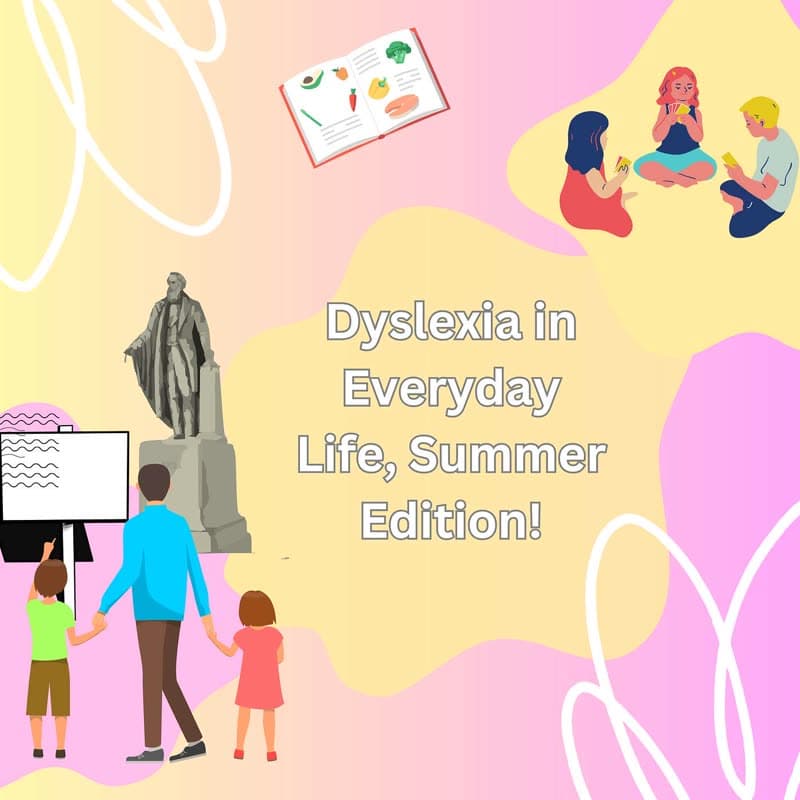
Dyslexia in Everyday Life - Summer Edition!
Re-aired Jun 15, 2024.
About this episode
In part 3 of our popular series on dyslexia in everyday life, we discuss five more ways that dyslexia affects everyday life outside of a school setting.
Transcript
Full transcript · 1,886 words · about 9 min to read. Press a timestamp to jump to that moment.
Dyslexia affects a lot more than just school. So as part of our series, here are five more ways that dyslexia affects everyday life.
Hey everyone, we're Nick and Sonja, and this is Dyslexia Journey, where we help you support the dyslexic kid in your life. So let's get on to those five more ways that dyslexia can affect everyday life, not just school. Yes, so jumping in, the first one is sort of signs and placards and information in museums and in zoos. So, for example, if you're at the zoo, there's usually a little sign in front of every animal enclosure that gives some information about the animal, what country they're from, you know, maybe other things like that.
In museums, even, you know, in sort of the old style museums, it's all just stuff to read. In the newer, more kid-friendly museums, there's more hands-on activities and stuff, but there's often still explanations for how to do the activities. There's little information things on placards on the wall or whatever. So, if you are the parent of a dyslexic kid, you've probably noticed that your kid tends to just not, not even attempt to read those.
Like, if you're at the zoo, they're just going to be looking at the animals and they're not going to, they're not going to even try to read the placards. They might, if there's like a map on it that shows where the animals are on, they might look at that. But they're not going to, in the museum, they're not going to try to read the information. You know, even we, I think, even as they get older, I think, as we've discussed before, it takes extra effort for someone with dyslexia to read.
And so, when they're doing something that's not school, that's out fun at the zoo or a museum, they're probably not generally going to be inclined to try to force their brain into that sort of school mode of trying to read. Yeah, it might not matter, right? Maybe you don't really need to have all the information on the placard. But maybe especially for those ones that otherwise are more engaging to them that are more hands-on, it might be good to realize that they might need that extra support to make it the best experience it can be or to not have it be frustrating if there are some instructions involved.
And this kind of segues right into number two, which is that they often won't read instructions on things. I mean, a lot of us don't read instructions on things, right? I feel like it's not like we always do, but let's say it's something more important, like they're older and they don't, you know, read or skip lines or have more trouble with the instructions for something like new Bluetooth headphones that they need to pair.
You know, that could be an example. A big example that I often think of, because it's such an important thing, is prescriptions. Hopefully the pharmacist also gives you some instructions, but you'd want to be very careful with those, for example. Yeah, I mean, in general, like Sonja said, like we don't, we don't often read probably instructions ourselves, even as non-dyslexic adults. But I think we do sometimes. So, for example, this is a very timely example.
We just got a new modem and router for our home internet connection, got delivered today. The setup was mostly automated with the app, but it's still, there was like this card that came in it that said, okay, here's what you do first, you know, first unplug the old one and plug in the cable. And there were those steps. And it occurred to me that someone with dyslexia might, you know, might even skip the sort of those initial steps there and just kind of start playing around with it, which they'd probably be pretty good at figuring out because people with dyslexia often have strong, you know, visual spatial skills and getting sort of things arranged like that.
So they're able to generally compensate for it. But it's just something to be aware of. Yeah. And then number three is board games. So we've talked in a past episode about some board games that we especially like. But it's really a part of board games, little bits of reading here and there. I mean, there's some rare exceptions that are more visual and we can talk about those again here. But, you know, in order to play and really, you know, all agree on the rules, for example, right?
Like, that's a big one and games that have a lot of rules so that you're all in agreement. You don't cause conflict with the other players, that kind of thing. Yeah. There's some games that are sort of explicitly involved reading that are more sort of word game oriented that just sort of keep in mind that that might be more challenging for your dyslexic kid. Like, I can't remember if we talked about the game code names on this show before, which is a great game.
But there is sort of the potential for a dyslexic kid to kind of maybe misread one of the words and then have not necessarily the best experience playing because of that. So in that case, it can be really good for someone just to read. It doesn't affect the game for someone just to read all the displayed ones that are there. So there can be little tricks to, like, helping it along. And they do have a picture version of the game now, too, because they have a lot of different versions.
Yes. And then another example where it's important is as your kids get older and start playing more complex games, sometimes if you think about, you know, when you play games that are more complex, you might need to consult the rules while you're playing to look up something that you can't ask the other players because it involves something that is, you know, part of your hand if it's a card game or something like that.
And so that's just to keep in mind that that's something that your dyslexic kid might have a little more trouble doing. Or be reluctant to do, maybe. Yeah, and they might just forge ahead and sort of, you know, make a mistake or not look up something that could be of benefit to them in the game. Little side note that, you know, some people, not just dyslexics, like to sort of try, like, playing a game before even understanding all the rules.
And I think that's totally valid, too, of course. It's more, in this case, we're just more trying to point out times when, you know, they might just naturally, like, avoid a piece of instruction that could cause a problem. Yeah, and one thing to note, actually, if you're, you know, of our generation, you might not realize that most games, there are now lots of videos of sort of how to play and, like, first gameplay and stuff that you can just go watch instead of having to read the instructions.
Yeah, so that's really nice. Yeah, sure. Okay, so number four, the fourth way that dyslexia can affect everyday life is in cooking. And we actually did a whole episode on this a while back, but I just wanted to reiterate that cooking involves reading, reading the recipe. And I just wanted to give sort of one anecdote about how dyslexia can interfere with reading a recipe. And so, okay, jumping in later here to give the anecdote for real, because the first time I explained it, it was pretty unclear.
So the anecdote is that when our daughter was trying a new recipe a little while back called pavlova, which is kind of like a meringue with involving eggs that kind of are supposed to kind of puff up, meringue-like, she kind of mixed the eggs with the other ingredients. So it's a good reminder to, especially if it's a new recipe. You know, offer to sort of read through it with your child before they start on it.
Even if they're independent in the kitchen in terms of the cooking technique, it can help to sort of review the recipe with them ahead of time. Well, I think that point that it was a misstep is also important because she was actually reading the lines, but it's so easy for a dyslexic person especially to miss a step like that. So number five, our final one for today is in restaurants, doing things like reading menus, whether it's, you know, where you're each handed a menu or if you're at a counter service place where the menu is displayed up on the wall.
So sometimes a dyslexic person might need a little assistance with that. And I think that's important to keep in mind just because it's often a fun experience, right? So to keep it – I think we mentioned it before as like a fun thing, so it's a way to have embedded reading if they want to try to read it, like for a child as well who's learning to read. But keeping the focus on it being a fun experience and not just, you know, letting someone be frustrated, being mindful about it.
Yeah, and it helps sometimes, especially in counter service restaurants or in fast food restaurants, there's often pictures. But there aren't always. And I think it might not even be obvious to you that your dyslexic kid isn't reading the menu or reading the specific stuff up on the board in a counter service restaurant. But you may start to notice that they're ordering the same thing every time. And it could be that's because they like it or it could be because they know they like it and they don't want to try to read the rest of the options.
And some of that, again, is like not even totally conscious, I think. It's more like they're used to not reading extra. And so they might not consciously say, I don't want to read that, so I'm going to order this. But it could still happen in that way anyway. Yeah, so it's just helpful to remember to maybe gently offer to go through the menu with them or whatever. And kind of playing into all of these, just one sort of overarching thing is that there's a lot of different fonts used, too.
So some of it has to do with that. All different fonts on menus, on instructions, on museum placards. And so there's all that playing in as well with how difficult or easy it might be. Yeah, I mean, I have a hard time reading the medication instructions from the pharmacy because they're such small print. I mean, yeah. Yes, I think a lot of us start to experience that as we get older. All right, so that's it for today.
Let us know in the comments if you've had these kinds of experiences or if you have other examples of dyslexia in everyday life that you'd like to point out. Music.
More from the show
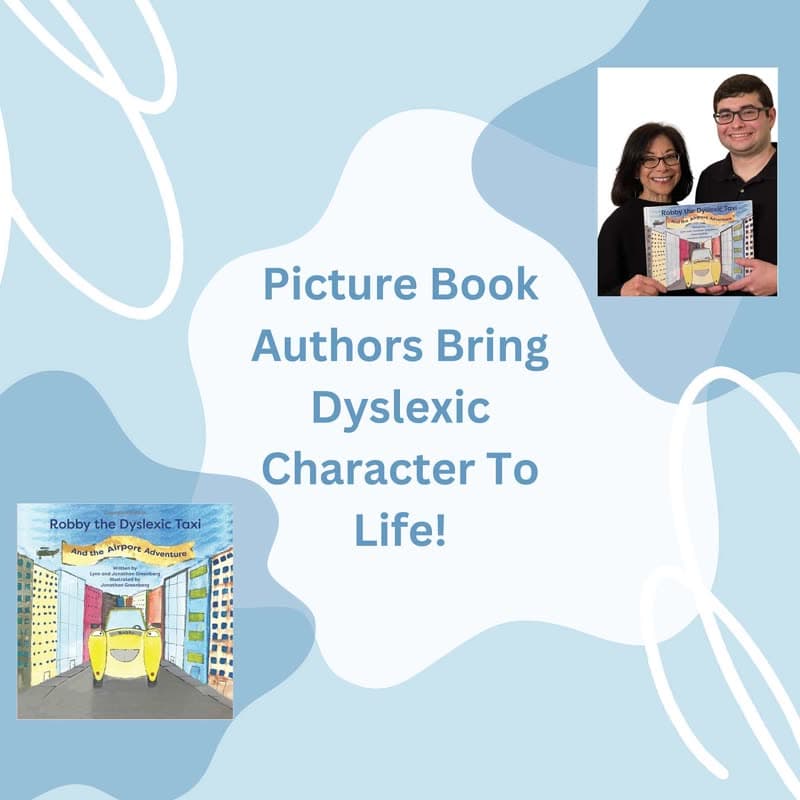
The Importance of Dyslexic Role Models, ft. Picture Book Authors Lynn and Jonathan Greenberg
Lynn and Jonathan Greenberg are the authors of the picture book, “Robby the Dyslexic Taxi And the Airport Adventure”, which is available at https://www.amazon.com/Robby-Dyslexic-Taxi-Airport-Adventure/dp/B0BTZVVX8H/ We are excited to share our interview with them, in which we explore what life was like for Jonathan…
The Importance of Early Dyslexia Identification ft. Amy Dobronyi of COKID
Amy Dobronyi (pronounced duh-BRO-nee) is a Co-founder and Co-chair of COKID (Colorado Kids Identified with Dyslexia - https://www.cokid.org/), a grassroots parent group, whose mission is to improve the lives of individuals with dyslexia through advocacy, education, and legislation.
Ensuring Support For ALL Kids Identified With Dyslexia ft. Amy Dobronyi of COKID
Amy Dobronyi (pronounced duh-BRO-nee) is a Co-founder and Co-chair of COKID (Colorado Kids Identified with Dyslexia - https://www.cokid.org/), a grassroots parent group, whose mission is to improve the lives of individuals with dyslexia through advocacy, education, and legislation.
Never miss an episode
New episodes every two weeks. Follow wherever you listen.