
Think Your Child Has Dyslexia? All About Getting Tested
Re-aired Oct 13, 2023.
About this episode
In this episode we dig into dyslexia assessments, starting with the four components that the assessments look at, as well as considerations and caveats.
Transcript
Full transcript · 2,490 words · about 12 min to read. Press a timestamp to jump to that moment.
So, you suspect your child might have dyslexia. What can you expect as you start to think about assessment?
Hey everyone, we're Nick and Sonja and this is Dyslexia Journey, where we help you support the dyslexic kid in your life. So today we want to talk a little bit about assessment, especially kind of right when you're first starting to think about it. some things to expect and be aware of ahead of time. And so the first, we're kind of divided up into four different categories of things to be thinking about and be aware of.
The first one is about the tests themselves and what they're comprised of. And so something you may not realize is that there is no single test for dyslexia. They're generally looking for several different things that we'll go into now, but there isn't just one standard test. Right, and different assessors, different schools or different private assessors might use different combinations of tests. They're all kind of generally looking for the same kind of thing, but there's a lot of, there's really a plethora of different tests out there.
And so the sort of specific tests that your child might be given are definitely going to vary. Right. And so kind of the four things that they're really looking for, the first is phonological awareness. And so that is really just the idea that words are made up of, of individual sound parts. And so that the way that they get at that is by asking kids to rhyme words, for example, or to divide words up into syllables.
And so that's trying to get at that sort of, just first like understanding of, the composition of words, orally. This isn't getting into the written, the actual reading part of it yet. Right. So, so like Nick said, that's going to be, more of an oral kind of testing usually. And, but the next one decoding is maybe what we might think of as the more standard kind of test, even though it's not only this.
and decoding means the connection between letters or parts of words and the sounds that they make. So that's, could a kid look at, a letter, you know, know what sound it makes, but also like a part of a word, would they have a sense of how to pronounce that, for example?
And then the, the third thing that they might be, that they will be looking for is reading fluency and comprehension. and so that's sort of, I guess, you can think of this, these as somewhat levels, like, it's hard to, to decode without understanding the phonological, aspect of it. And it's hard to have reading fluency and comprehension without being able to decode. And so, reading fluency and comprehension are actually two different things.
we don't, we don't often think about the two different aspects, but fluency is just how, how accurately and quickly can you read something, but not necessarily understand it. And then comprehension is, do you understand what you're reading and can you retain the information? Right. And, you know, sometimes at a pretty deep level, depending on the comprehension test. okay. And then the final one that they're looking for can be rapid naming. And so it's things rapid naming just as a general category means things that should be familiar.
So it could be letters, numbers, but also commonly used words might be in that category. And so like, can they just quickly recognize that and easily make that connection that this is something that's familiar to me already. Like, I think this is where the concept of sight words might come in. yeah, I think so. Although it can be even really, you know, small sight words like the, or, things like that. And that can be surprisingly difficult actually for dyslexic person sometimes, like just because of the nature of dyslexia.
Yeah, definitely. okay. So that was the first sort of, aspect of assessments that, that we think it's important to be aware of going in. and then I guess, did you want to talk about the second? Yeah, well, there's just, this one's kind of almost a caveat to the first, the second one, which is that sometimes other aspects of a brain difference, might be coming into play instead. So some ones here, particularly that might pertain to those kinds of tests we just talked about are slower executive functioning, than the average and similarly slower processing speed could really affect this, particularly because, these tests often are timed, you know, rapid naming, obviously you hear the rapid, like in the word, right?
The idea is how quickly can you make that association? But if you also had a slower processing speed in your brain, that could be, that could be involved as well, or instead of a potential dyslexia diagnosis. And as we've discussed, previously, on this channel, a lot of testing, in schools is, is timed, time pressured, including these assessments. Not all of these assessments are, and different people do it differently, but, but sometimes when you're being assessed for dyslexia, it is going to be a timed, exercise.
And so that, that definitely, you can, you can easily see how, like, slow processing, or slow executive functioning type of difference in the brain could also contribute, to problems with, the various aspects of, of reading that they're looking for in the assessments as well. Right. And so the next aspect, has to do with, I think we often think of the schools as sort of like a first, a first place where the testing might happen, but let's talk a little bit more about how that might play out.
Right. So really, this, this is really just something to be aware of. Like, if you think your kid has dyslexia, you cannot assume that the schools will detect it. they, the, the sort of requirements of screening for dyslexia vary by state and jurisdiction. at least in the U S and I'm not really familiar with the, the laws in other countries. but in general, you just can't assume the school is going to going, going to be, to detect it properly.
And there's a few reasons for this. the first is that, screening just isn't standard in all, in all school districts. some states mandate it, some don't, there's different levels of screening that's mandated. some districts have it, some don't. and then even if it is mandated, the standard tests that they give might not detect all forms of dyslexia. so, for example, our daughter, who has dyslexia, who we talked about a lot on, on, on this show, her dyslexia was not detected in school.
in, in, even though she was struggling to read in, in kindergarten and first grade, it, it wasn't, it wasn't diagnosed until several years later. and she does have, what we've talked about before, so-called stealth dyslexia, which does, kind of get masked and is, is harder to diagnose. so that's just something to be aware of. Yeah, and then testing's also usually just done in one grade, you know, when they make it standard, they sort of pick a grade, often kindergarten or first grade.
And, and so, of course, like that also, you know, provides a lot of times when someone could slip through the cracks and, and not be detected. Exactly. Yeah. I mean, you might not realize, like for us, in kindergarten, we didn't, when our daughter was in kindergarten, we didn't really sort of realize the extent of the problem yet because, kids without dyslexia, like everyone learns to read kind of at a slightly different age and a slightly different, at a slightly different rate.
And so we just assumed, at the beginning that she was just learning to read a little bit later than other kids. Right. Right. and, and then also the testing isn't as thorough that's done through the schools. It's, you know, an hour. I mean, in our case, when they just did a quick check, it was even less than that versus often like at a private center, it'd be more like a day and a half for private testing.
So as you can imagine, there's like much more full battery of tests, you know, that they're looking at. And so it's much easier to slip through the cracks with that shorter testing. Yeah. and then I guess the last point, did you want to talk about the last point? Sure. So the, the, the fourth thing we wanted to talk about today is you're starting to look at assessment is how, you know, so-called giftedness where a child's maybe more advanced in a certain area could interfere with the dyslexia diagnosis.
so it's partly because a child might be easier, able to compensate in certain ways if they're really strong in certain skills. but it could also be that they're more advanced in a certain topic. So if you think of something like comprehension, they might be able to, if they're really good at a certain topic or know it really well, or, you know, just naturally like are good at it, they're going to be able to like connect the dots a little easier.
And it won't like something like not having as much comprehension and it might not show up as easily because of that. so it's definitely something that can mask dyslexia. and there are, there are some centers out there who specifically test in ways that they try to, to figure this out. And so how they're able to do this without getting too far into it is that they're able to do some other tests to figure out like, how good or how intelligent they are in certain categories that doesn't have as much to do with the reading, you know, and the things that dyslexia would be trouble with, and then they can compare it to trying to do it when it is with the reading.
And they can see like that if there's a really big gap between when something that dyslexia is going to cause trouble for is involved or not. Yeah. And that's, again, something that the schools aren't probably going to catch. because if you have a kid with, with dyslexia who is performing at grade level or higher in school, the schools are not going to be worried about that kid. Right. And we've talked about this before that especially stealth dyslexia can be really masked, by, by, quote giftedness.
And, this really affects, and it's not that the schools, don't care about your child. It's just that if they're not sort of obviously struggling and way below grade level, they're just not going to get the attention in the sort of resource strapped public school setting. Exactly. Yeah. So what can you do about this? Let's talk about a few ways. Yeah. Things you could, you can start to think about doing. Yeah. And so, I guess our first tip here is that you can and should always request, dyslexia screening from your school.
If you suspect that your child has dyslexia, it doesn't matter what grade they're in. It doesn't matter, you know, whether they've been previously tested. it never hurts to request that screening. Now we're not, legal experts, so we don't, we don't know like whether your school will always be obligated to provide that. but it might be different, different district states, you know, countries, but, but it never hurts to ask, right? Like the worst that can happen is they say no, and then you have to seek something else out so that like, that should always be your, your first step, I think.
Right. Because it could end up that the kind of test that they give does catch it in your case, for example. Right. it's just important to keep in mind that if it, if it does come out as like a negative that, that they don't have dyslexia, that it might not have been comprehensive enough. Yeah. And so go with your gut. Like if, like we talked about this before too, like if you suspect that there's something, going on there with your child, that, that they might have, other difficulty that it might be dyslexia, even if the school says that they haven't detected it, it's worth pursuing other avenues.
Right. Right. And then, so if, so this does get into some cost issues here, but like really private testing is the most comprehensive, so, you know, it's recommended though often expensive. It is, it really is not cheap. it, it's really important. We believe to get your child diagnosed though. So if you can afford it, it is, we definitely think it's worth doing, but we realize of course that, that not everyone, can afford that.
And it's good to check with your district, for who can do the assessments. That will be considered, you know, a valid test too. So checking into everything that's required and will be considered valid as you're picking that. And then, if cost is an issue, which I think it is for most people, if you're near one option is that if you're near a university, they often will have testing that isn't necessarily free, but is a lot cheaper than the private options.
so this is often, if there's like a school of education, at, at the university, or, or something like that, it doesn't necessarily have to be a school of education. It could be psychology, something like that. they'll often offer testing, maybe run by grad students that's, that's, or maybe part of, programs there to sort of help the community or maybe part of a research study. Like there's, it's definitely worth looking into, although keeping in mind that that doesn't still necessarily mean that it'll be the most comprehensive test or that they'll like, they might not be looking for the self dyslexia, for example, and the whole thing we just talked about, like giftedness often doesn't apply either.
So even though that's a great option and probably a next step, especially in terms of consideration of cost, it's still worth keeping in mind that even though they're a university, it still might not catch your child's dyslexia. Right. So hopefully that's helpful and you can sort of see maybe some steps and some, some of the things to expect from the tests. So yeah. And if anyone else has experiences with, as they started out assessment and how it went that they want to share, we'd love to hear it in the comments.
And if anyone else has any experiences with assessment that they'd like to share, any tips about it, we would love to hear about it in the comments. Thanks.
More from the show
The Importance of Early Dyslexia Identification ft. Amy Dobronyi of COKID
Amy Dobronyi (pronounced duh-BRO-nee) is a Co-founder and Co-chair of COKID (Colorado Kids Identified with Dyslexia - https://www.cokid.org/), a grassroots parent group, whose mission is to improve the lives of individuals with dyslexia through advocacy, education, and legislation.
Ensuring Support For ALL Kids Identified With Dyslexia ft. Amy Dobronyi of COKID
Amy Dobronyi (pronounced duh-BRO-nee) is a Co-founder and Co-chair of COKID (Colorado Kids Identified with Dyslexia - https://www.cokid.org/), a grassroots parent group, whose mission is to improve the lives of individuals with dyslexia through advocacy, education, and legislation.
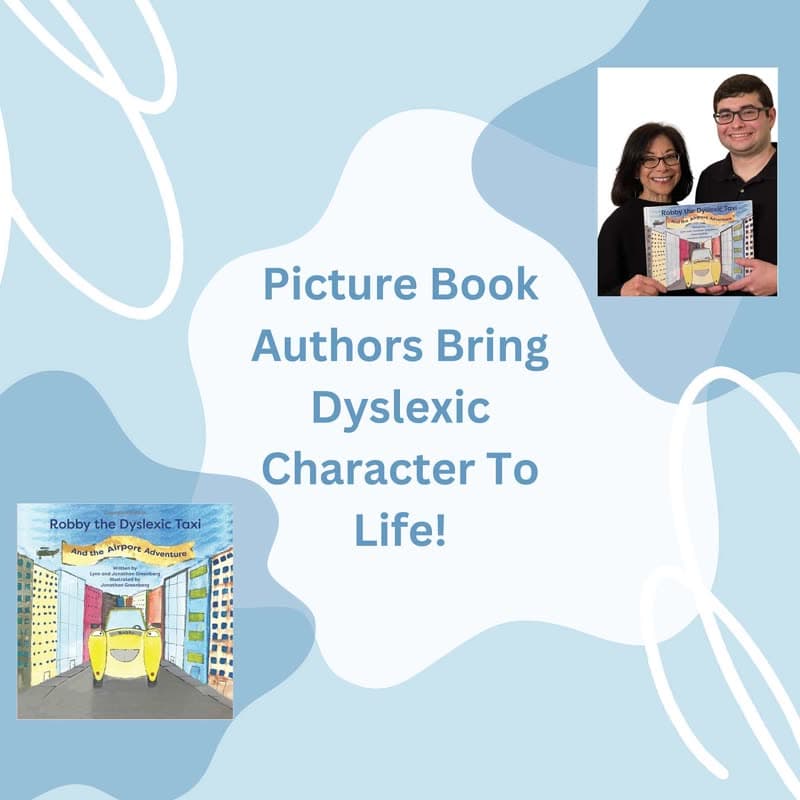
The Importance of Dyslexic Role Models, ft. Picture Book Authors Lynn and Jonathan Greenberg
Lynn and Jonathan Greenberg are the authors of the picture book, “Robby the Dyslexic Taxi And the Airport Adventure”, which is available at https://www.amazon.com/Robby-Dyslexic-Taxi-Airport-Adventure/dp/B0BTZVVX8H/ We are excited to share our interview with them, in which we explore what life was like for Jonathan…
Never miss an episode
New episodes every two weeks. Follow wherever you listen.