
Why You Should Cook With Your Dyslexic Kid + 3 Tips
About this episode
Today we discuss several benefits of cooking with your dyslexic kid and provide three tips for making it a fun and successful experience!
Transcript
Full transcript · 2,162 words · about 11 min to read. Press a timestamp to jump to that moment.
Cooking is an activity that we enjoy doing with our dyslexic daughter, and we discovered that it has some unexpected benefits. Stick around to hear what those are.
Hey everyone, we're Nick and Sonja, and this is Dyslexia Journey, where we help you support the dyslexic kid in your life. So yeah, today we wanted to talk about a kind of specific activity, cooking with your kid, and we just thought we'd start out with talking about why this can be a great activity to do together. Okay, so the first reason is very related to dyslexia in reading specifically, which is that it is a really active and motivational way to practice embedded reading.
So what embedded reading is, is the kind of reading that you do that, like, you're not necessarily setting out to do it with the purpose of doing a reading activity, but there is reading involved in whatever the other activity is that you might do. So you just, you might be out in the world or doing a specific activity and there's reading involved. So that's what that means by embedded. It's like embedded into the activity or the environment already, some bit of reading that needs to be done.
And so, so in this case, the actual cooking and the prep both involve that kind of embedded reading. So obviously reading a recipe, if you're using recipes involved, even the prep work, like making shopping lists and finding ingredients in the store with the different labels in the store and the different, you know, just finding the products and looking at those kind of cues involves reading. So it has a lot of embedded reading actually involved.
And then, you know, the active and motivational, it's also something fun to do, right? Like that's part of the purpose of embedded reading. But with this kind of activity in particular, because it's a fun activity that you're doing together and it hopefully involves a yummy outcome, for example. Like it's sort of inherently motivational and a different way of going about having some reading. Yeah. And to add to that, we've talked previously about various ways that dyslexia affects everyday life.
And two of those ways that we mentioned are shopping and reading recipes. And so this is kind of the counterpoint to that, which is that those activities are ways in which you notice that dyslexia can affect everyday life. But sort of on the counterpoint of that is that there are good ways to practice this embedded reading in the midst of a more entertaining activity. Right, right. And then did you want to talk about some of the other?
Yeah, so I'd say the second way that, or the second, I guess, reason why you should cook with your dyslexic kid is that it really plays to their visual spatial strengths. And particularly around you're doing something physical. You're creating a physical product that, of course, is going to be enjoyable to eat at the end. But the main point about it playing to visual spatial strengths is that it's something that they can sort of envision.
And dyslexic kids are generally good at visual spatial skills, at envisioning three-dimensional objects. And so if you're doing something like making a cake or something savory, it doesn't have to be sweet. It's just a cake's a really good example here because children like to sort of decorate cakes and you can envision like a multi-layer cake or whatever. It's a really good way for the kids to sort of do an activity that plays to their visual spatial strengths.
And so that they can generally feel good about doing something successfully in that regard. And then I guess a third reason here, it's kind of along those lines of the visual spatial strengths, but it's a little bit different, is that cooking can be quite creative as well. And so, again, dyslexic kids are, you know, they often, as we've discussed many times, struggle with the sort of mechanics of the reading and writing, but they can often have strengths in creativity in many areas.
And so finding activities that, you know, while helping them practice their reading and writing, or even not helping them practice their reading and writing, that can really play to their strengths of their creativity is really important as well. And so cooking is something that, if you're just literally following a recipe, you might not think of as super creative, but you can modify things, you can taste it and add more spices, you can decorate sweet treats, etc.
So it can be very creative. Yeah, and then a fourth and final reason why it can be great to cook with your dyslexic kid is simply that it is a nice connective activity to do. It's very much like a fun thing to do. It's something where you're doing it together, you know, you're working together to do something. And so it provides that closeness and it provides that opportunity to connect with your child that's in such a nice, relaxed kind of a way, even if some reading is involved, right?
And I think it's important to mention here, and this, I guess, is starting to transition into our caveats. And our tips about this is that it is important to have this be something that the kid is enjoying, right? So, I mean, I think, I think that it could be easy to get, if we're starting to think about it, like, oh, all the embedded reading ways, you know, like, if we're starting to get really rigid around that, because we're like, oh, this would be, you know, it can feel like this great idea.
And it is to use embedded reading, but then we have to be careful we don't get, like, this sort of sense of urgency into it or, like, this was actually the reading practice or that kind of thing. So it's really important to just sort of think of this as a benefit, a benefit and, like, almost more like that you're going to do it anyway, but then you are making, you just realize, oh, the reading's involved so that you can make the best use of that just in a natural way as you're doing it, if that makes sense.
Yeah, I think that's so important to say and emphasize, and you don't want to get in the situation where you're, like, sitting your kid down and saying, okay, now we're going to read these five recipes and decide what we're going to do, you know, and they'd rather be doing something active at that moment or something, right? Like, you got to, you got to be doing, you got to be going always, as always, go with your child's interests.
Yeah, and again, also, like, you might encourage them to do the reading, but then be careful. I would be careful also that, like, because that would come through, I think they would notice that right away, like, if, you know, like, not be disappointed if they're then maybe resisting the reading part of it a little bit or something, try to take it more like it might gradually come to them as they're more excited about the recipe or maybe they just read one little part and that's okay, you know, it's more like trying to, trying to, like, have this be a way that reading's part of their life and then, you know, sort of trying it, seeing how much they're able to do with it, but not pushing it.
So that's, I guess, the first caveat or tip. Yeah, that's a really good point, thanks for bringing that up. And then the second one is to sort of, to be mindful that measurements can be hard, you know, in a way that seems opposite from the visual-spatial thing because, you know, often dyslexic kids can see really easily, you know, really well the actual physical measurements, but, like, in terms of the actual recipes, it can be really easy to read those numbers wrong.
So that's something to be, you know, to be mindful of so that they're not upset about a mistake that's made in the recipe or, you know, the whole thing getting ruined because it was, like, the wrong amount that they read. So it can be important to do that. And then even things like teaspoon and tablespoon look really similar. So there can be those kind of reading things involved that are important to be aware of.
Or, like, a quarter cup versus a half cup. Obviously, we're using U.S. measurements here in our examples. It's sort of, like, a very, very detail-oriented to figure out exactly what the correct measurement is. And cooking is sort of inherently detail-oriented. So it's just good to sort of double-check that with your child as you're doing the cooking so that to sort of reduce the chances of having a result that you're not happy with, I guess.
Yeah, so that's another good tip. So another good tip is to double-check. Yeah, exactly. Yeah, and so along those lines then, you know, so we talked about kind of double-checking, not just the measurements, but, like, the ingredients as well and the order and the instructions, like, you know, whisk versus stir versus mix, whatever. Just sort of making sure that you're doing the details correctly. And then also another tip that's really kind of very similar to that as well is to make sure you read through the whole instructions, the whole recipe with your child before you start.
So sometimes, especially people who are resistant to reading might just sort of read the first or just read the ingredients list and then think, oh, yeah, like, I've done this before. You put all the ingredients in a bowl and you mix them together. And it might be that, oh, like, the first half of the ingredients you have to do, you know, something with, and then the second half of the ingredients you have to do something else with or whatever, right?
There's all sorts of variations in cooking. It's just important to make sure you kind of understand the whole process before you just jump in. Right, and that final tip can be important, I think, especially for dyslexic kids because, especially, like, I don't know if this is true for every dyslexic kid, but in our daughter's case, she sometimes will tend to, like, do as little of the reading as she can just automatically just because that was her way, you know, before.
And so she might have the tendency to just read the beginning and not even notice, not really even be thinking that she's doing that, you know, whereas for someone else, they might immediately scan, you know, scan the whole thing or something like that. Yeah. So those are the kind of caveats or tips. I did want to add something about age level here. I think the way we've been discussing it so far, it sort of sounds like it's geared toward younger kids, and I think that that was kind of what we intended.
So this is definitely something you can introduce with your kids at quite young age. But I do want to make the point that you can continue doing it with them as they're teenagers as well. Like, this is, you know, it might take different form. Maybe when they're teenagers, they might want to be more independent about it. Or they might want to, you know, take pictures of it, record themselves doing it, you know, get kind of a social media aspect out of it or whatever.
But the point is that it's not only an activity for younger kids. Right, right. And that's reminding me that we actually mentioned cooking when we were talking about activities. I can't remember what video it was. And we were talking about that in the context of doing almost like a competition, not too competitive competition, but just sort of like it could be, you know, like a cooking show kind of thing, but where it was like best, you could be like most, best decoration, best whatever.
You could have like different categories like that. So there's all kinds of ways you could really use this for different age levels and interest levels too. As long as the kid wants to do it at all, of course. So hopefully that is helpful to sort of think creatively and very comprehensively about how cooking can be a fun activity to do with your dyslexic kid. And if you have more, if you have some experiences to share about that, or if you have more tips that we forgot or didn't think of, please feel free to put those in the comments.
More from the show
The Importance of Early Dyslexia Identification ft. Amy Dobronyi of COKID
Amy Dobronyi (pronounced duh-BRO-nee) is a Co-founder and Co-chair of COKID (Colorado Kids Identified with Dyslexia - https://www.cokid.org/), a grassroots parent group, whose mission is to improve the lives of individuals with dyslexia through advocacy, education, and legislation.
Ensuring Support For ALL Kids Identified With Dyslexia ft. Amy Dobronyi of COKID
Amy Dobronyi (pronounced duh-BRO-nee) is a Co-founder and Co-chair of COKID (Colorado Kids Identified with Dyslexia - https://www.cokid.org/), a grassroots parent group, whose mission is to improve the lives of individuals with dyslexia through advocacy, education, and legislation.
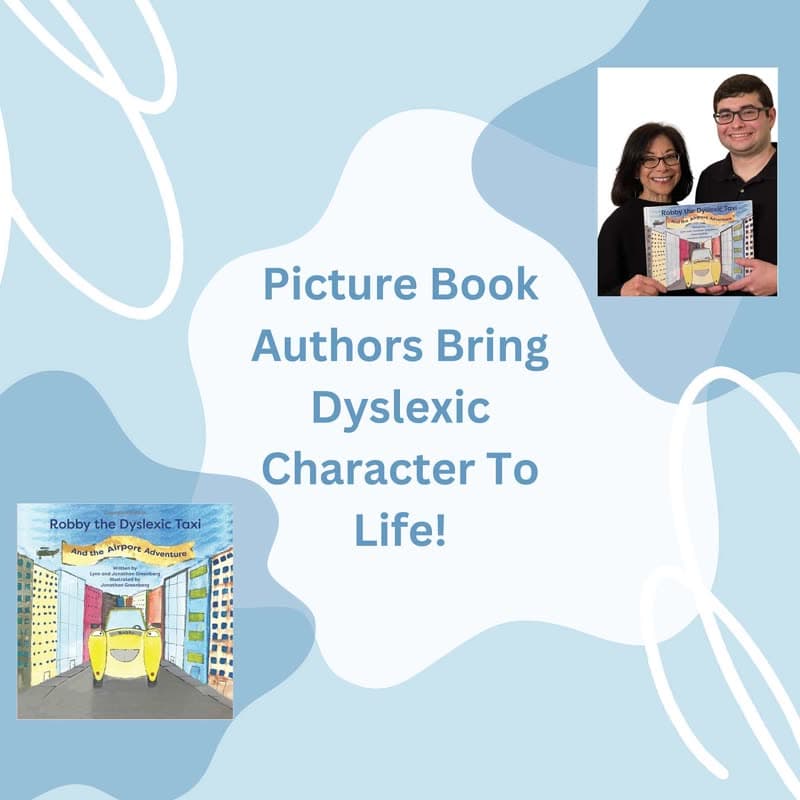
The Importance of Dyslexic Role Models, ft. Picture Book Authors Lynn and Jonathan Greenberg
Lynn and Jonathan Greenberg are the authors of the picture book, “Robby the Dyslexic Taxi And the Airport Adventure”, which is available at https://www.amazon.com/Robby-Dyslexic-Taxi-Airport-Adventure/dp/B0BTZVVX8H/ We are excited to share our interview with them, in which we explore what life was like for Jonathan…
Never miss an episode
New episodes every two weeks. Follow wherever you listen.