
Transcript
Full transcript · 1,728 words · about 9 min to read. Press a timestamp to jump to that moment.
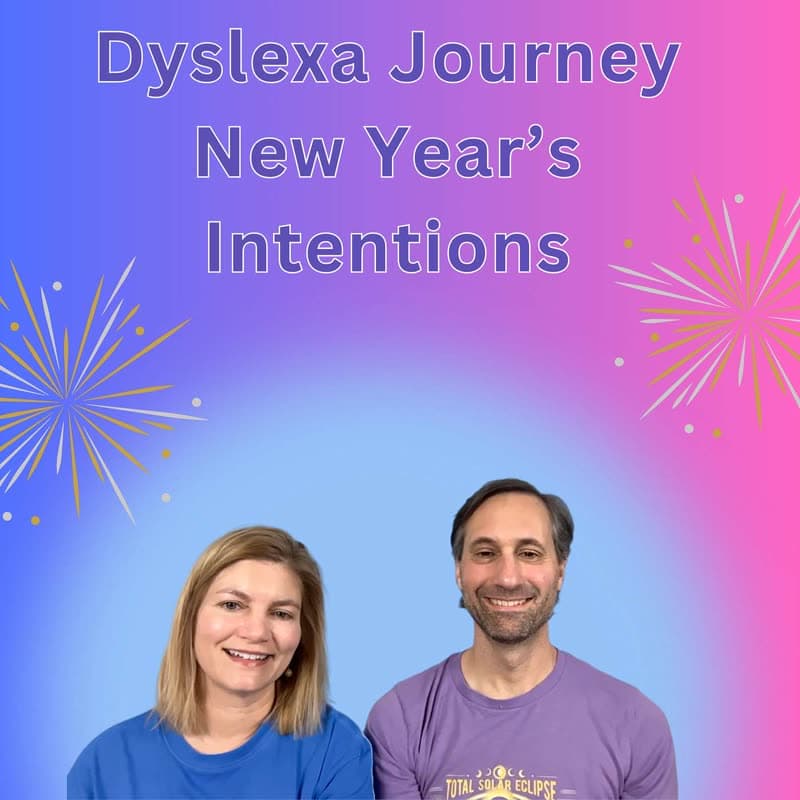
Happy New Year, everyone. Today on Dyslexia Journey, we want to share with you one intention each that we have for the coming year.
Got me diagnosed when I was in third grade, and it was the most relieving day of my life because I finally had like kind of a place to hang my hat and say, see, I told you I'm not lazy, definitely not stupid. I just learned differently. Like, that's totally okay. With dyslexics, we were often, you know, just set up for failure because, you know, we were given books and tasks that really are not appropriate for the level that we were at.
So how do you expect anyone to be open to learning when their entire relationship with reading, with learning, is physical pain? Wish I had understood when I was younger that the fact that my brain worked differently than people meant that I would be good at things in ways that other kids were not going to be good at. I just assumed, I can't be dyslexic because letters don't jump up and down for me.
Dyslexia is not a disorder. It is not a disease. Once you sort of own it and embrace it, then you can have the power to deal with it. It's sort of empowering and also enriching to the whole community. To those who don't understand what dyslexia is, that it's not a negative, it's not a problem, it's, like we keep saying, superpower.
Hey everyone, we're Nick and Sonja, and this is Dyslexia Journey. And whether you are watching this at the beginning of 2026, which is when we are putting it out, or whether you're watching it later, hopefully you'll find some inspiration from the intentions that we've come to realize we have going into this new year. I mean, I think for me at least, it wouldn't have had to be at the new year, but, and it's been gradually forming my intention, but it sort of did come to a head just right around this time.
So, so on this channel, we do talk about dyslexia, we talk about the dyslexic life, often in terms of going through school and activities as a kid, you know, in the parenting journey. If you have a dyslexic kid, we do also do interviews with dyslexic adults and talk about sometimes issues related to being dyslexic as an adult as well. You know, all in service of hopefully helping you feel a sense of community, you know, so many people really are out there, but sometimes people don't still realize that, that, you know, they say probably one in five people are dyslexic.
There may be somewhat of a spectrum there, you know, as we know, when we talked to the doctor's ID recently, there are many, many genes involved, actually. So, but in any case, we just want to get the word out more about being dyslexic and what it's all about, and to, you know, foster the sense of community and, oh, oh, someone else gets that too, someone else has experienced that, tips and tricks, strategies, all those kinds of things.
So, I guess that to say that at the beginning is like our continuing intention, right? Our intention for this channel, before we get to our personal intentions, is to keep doing that. And as always, we welcome your thoughts, your questions, if you have them. Sometimes we do a question, a question roundup kind of show. Or if you have a suggestion, actually, for a guest who you think would be good to help in the show, that would be great too.
Or maybe it's you yourself. Right. It could be you yourself. And you can reach us, if you want to do that, just go ahead and email us. You can put in a comment, we'll probably see it, but even better, go ahead and email us. Oh, yeah, that email address is parentingdyslexiajourneyatmail.com. Okay, with that introduction out of the way. So, I'll just go ahead and start sharing mine. So, like I said, in addition to just hopes for the channel, there's a personal intention that's been coming up for me, just in my own journey with, I guess you could call it learning.
You could call it an activity, a hobby, learning, whatever. But basically, what's happened is, this fall, I started to feel this pull to start studying foreign languages again, more strongly. And specifically, I was feeling a pull to study a language that I start studying a language that I'd never studied before. It's Norwegian, actually. And, you know, I do have some ancestry there, that's probably part of the pull, and, you know, I'm interested in visiting again.
But I think what was interesting about this go-around of being interested, because I do have lots of interests, was I kind of let myself pursue it. And so, it made me realize, in the fact that I had to let myself pursue it, that I had all kinds of, you know, all kinds of ideas and thoughts and beliefs that would potentially limit me. Other than time, of course. But, like, I think you'll do anything for small bits of time, right, if you're actually interested, if you let yourself.
And I think it was because, you know, ideas about whether it's even useful to learn. I've put my time towards a foreign language. I have these other passions I'm pursuing, including Dyslexia Journey, that are important to me. So, like, what is the purpose of something? What is the, like, even then the particular language? Like, I used to have ideas that I think a lot of people still have about, like, well, the languages that are spoken most often are the best to learn.
And, of course, there's truth to that if you're using it from a business context or certain contexts. But I really just wanted to start learning this language. And so, how it becomes an intention for me is to, it's both around that language specifically and continuing to pursue that when that's where my interest is. But it's also, it's also coming back to the love of learning. So, and it's, you know, making me realize we touch into this sometimes on this channel, that love of learning.
We'll often talk about it in the context of trying to, you know, still have your kid maintain interests or interests as an adult. But, like, with a kid in particular, because it can get so focused on particular skills, reading and writing and, you know, these certain ones that the dyslexia is affecting in school. You know, to try to keep those passions going, you know, to try to keep those passions going, to try to keep interests going.
And I think it just sort of came home to roost for me that I maybe wasn't doing that for myself. And so, I think, I think going into this will also help me to, to even more, I guess, authentically or, like, more, with more passion for other people and doing the same thing. To, to really understand that that love of learning also has to be a foundation in all of this when we're talking about dyslexic kids and learning.
Or, you know, anyone in learning, but on this channel when we talk about dyslexic kids and learning. So, that is my intention to, to really come back to that foundation of love of learning and pursuing learning for its own sake. Yeah, that's, that's really inspiring, actually, to, I think, we, dyslexic or not, we could all benefit from remembering that love of learning is the whole point. All right. Did you want to move on to yours?
Sure. Okay, so, so mine, my intention is sparked by some personal travails I've been going through. I've been suffering from some lower back problems recently. And that has made me realize how exhausting it is to deal with a chronic condition. And, this made me think about, dyslexia and how we've talked about, we have talked about this on the show, how, how exhausting it is to have a learning difference and to be dealing with that constantly.
But I think that I've taken that, and I really have, because I don't have dyslexia myself, I've really approached this whole Dyslexia Journey, from more of an academic intellectual perspective. And I don't think I, I think I can, or my intention here is to, approach this with, with more empathy, really, toward the people who are dyslexic, who have learning differences, who are dealing with this 24 hours a day. And I, I think that I really, can be more, more empathetic.
And I think really we all need, need to remember to be empathetic toward the struggle and just the, the mental effort that it takes and just how exhausting this is. and I, I mean, obviously, physical, problem, it's not the same as a learning difference. I don't want to imply that, but it's, it's really just sparked in me, and made me realize that, I perhaps have been, yeah, just a little, a little too distant.
And, and I really, always want to keep in the forefront, and I think we all should keep in the forefront, the, the kind of, just emotional well-being of what our dyslexic friends, are going through. But yes, I think, so keeping up that on this channel as well, I think to, to remember, and listen to people, right? I think that's like a lot of the reason too, why we like to have a lot of variety of people on and a lot of different people to interview who are adults.
Because people really do have nuances to their own journeys. And then sometimes that can either just help us understand better how it can be, or sometimes it's that touch point for someone who maybe is more in a minority that way. so, so great. All right, well, if you want to let us know if you have any particular intentions regarding dyslexia or not, in the comments, we'd love to hear them. And like we said, just keep in touch and let us know what you'd like from this channel.
Happy New Year.
More from the show
When Phonics Isn't Enough
In the world of reading instruction, phonics has long been hailed as a cornerstone for teaching children to read, particularly for those with dyslexia. However, a recent article raises an important question: is there a limit to how much phonics can help as students progress into middle school? In this episode, we'll…

She Didn't Know She Was Dyslexic Until She Learned English ft. Haiyu Zhang
Haiyu Zhang grew up in China and moved to the US as a teenager. You can find her online at https://hz2784.github.io/.
Parenting the Child You Have ft. Pediatrician Kristen Cook, MD
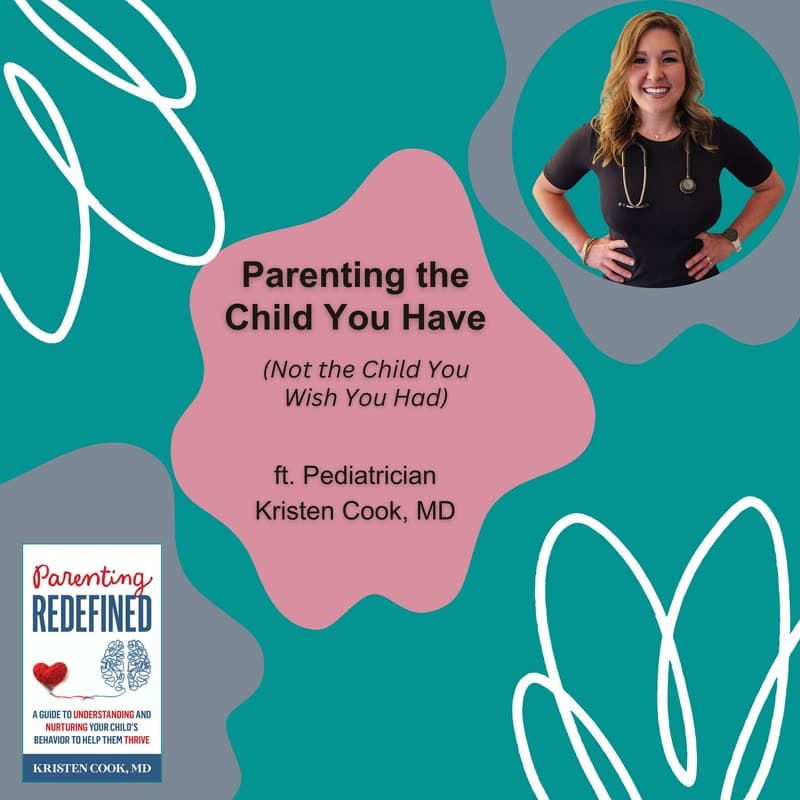
Have you ever wished that you could sit down with your child's pediatrician and talk about dyslexia, neurodiversity, and parenting? Well, this is your chance! We recently enjoyed a conversation with Dr.
Never miss an episode
New episodes every two weeks. Follow wherever you listen.