
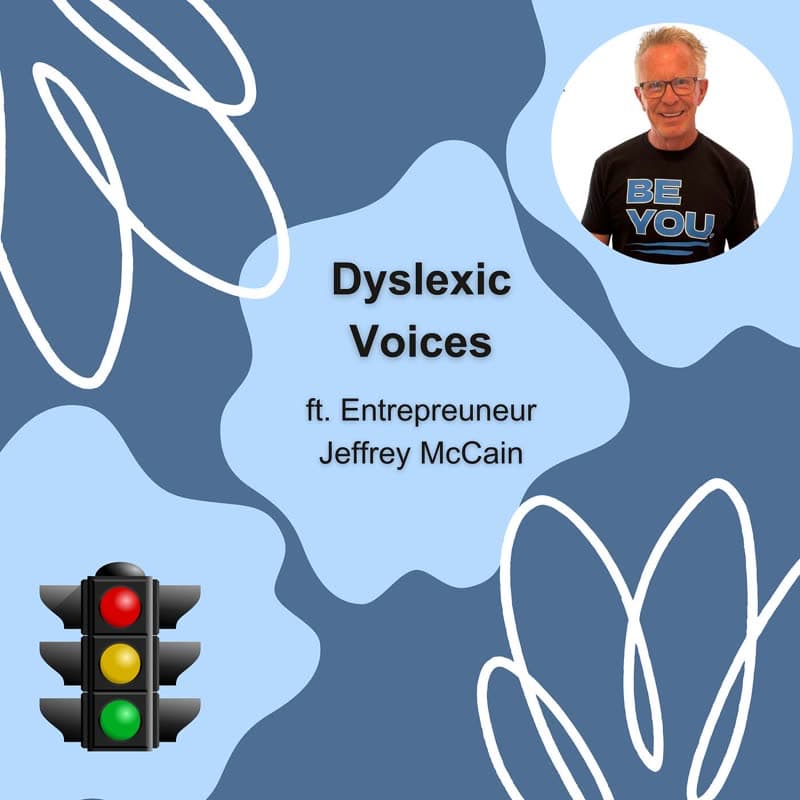
How Dyslexia Shaped a Successful Entrepreneur ft. Jeffrey McCain
About this episode
What does it look like to build a successful career with dyslexia? In this episode, entrepreneur Jeffrey McCain shares how dyslexia shaped his thinking, the challenges he faced in school and business, and why he now sees dyslexia as a competitive advantage. Whether your child is struggling with self-confidence or you’re looking for role models to share with them, Jeffrey’s story will inspire your whole family. Find Jeffrey at jeffreylmccain.com. If this episode resonated, please leave a review — it helps other dyslexia parents find us!
You can find Jeffrey online at https://www.jeffreylmccain.com/. You can purchase his book at https://www.amazon.com/dp/B0DZX35GYD/.
Transcript
Full transcript · 7,237 words · about 36 min to read. Press a timestamp to jump to that moment.
I wanted to go out and share with kids and people that, you know, that I know that are struggling out there, and I see a lot of them, and I know some of them and stuff, and I said, you know, I would love to, like, you know, get my message out there that there's hope for you, you know, focus on what you can do, and manage around your shortcomings.
They got me diagnosed when I was in third grade, and it was the most relieving day of my life, because I finally had, like, kind of a place to hang my hat and say, see, I told you, I'm not lazy, definitely not stupid, I just learned differently, like, that's totally okay. We were dyslexics, we were often, you know, just set up for failure, because, you know, we were given books and tasks that really are not appropriate for the level that we were at.
So, how do you expect anyone to be open to learning, when their entire relationship with reading, with learning, is physical pain? I wish I had understood when I was younger that the fact that my brain worked differently than people meant that I would be good at things in ways that other kids were not going to be good at. I just assumed, I can't be dyslexic, because letters don't jump off the downtrend.
Dyslexia is not a disorder. It is not a disease. Once you sort of own it and embrace it, then you can have the power to deal with it. It's sort of empowering and also enriching to the whole community. To those who don't understand what dyslexia is, that it's not a negative, it's not a problem, it's, like we keep saying, superpower.
Hey everyone, we are Sonja and Nick, and this is Dyslexia Journey, and today we are welcoming Jeffrey McCain as part of our Dyslexic Voices series.
Wonderful. I'm glad to join you and look forward to our conversation here. Great. Yeah, and we're very eager to talk about your book, but before we do that, let's go back a bit, of course. We like to hear about people's journey as a dyslexic person, and so I'm wondering if you could share, kind of going way back, like sort of your earliest memories, or, you know, probably before you even knew you were dyslexic, what that was like for you.
Sure. So, I grew up in Southern California in the mid-1950s, went to school like the rest of the kids, looked like the rest of the kids, thought I was like the rest of the kids until about third grade. Then I found out that I wasn't. They were learning to read and write, and I couldn't. So, teachers, my mom, and, you know, all worked together and, you know, tried to get me to get up to speed, but I thought, well, maybe fourth grade, he'll catch up.
Well, it just got worse. Fourth grade was worse than the third and fifth and so on. Somehow or another, I was a pretty determined, clever young boy, so I figured out how to get through school. But reading and writing was not one of them, the things like art classes and high school and woodshops and all that kind of stuff. That was in my wheelhouse. I always, as a young kid, liked building things and making things, and there was really nothing I couldn't do as far as that goes.
So, I graduated high school in 1970. My parents had an electrical contracting company that worked out of their house, and I had two older brothers, three and four years older, and I had been going to work with my dad every chance I could during, you know, summer times and all that kind of stuff. And so, I was pretty proficient at being an electrician the time I got out of school. So, that was like the best day of my life.
Everyone else thought they were going to go to college and everything. I mean, to me, I was counting the minutes when I would be getting up in the morning, going to work versus to school. School was, to this day, was not a good time for me. You know, I was sitting in the back of the class just hoping, crossing my fingers that no one would ask questions, and it wasn't a problem child, and so somehow or another, I made it through school.
But, as I look back, I think I learned a lot in school. I think it shaped my whole mind how I would think. I knew I was smart. I just couldn't learn. And so, what I had to do, and what I did do, is I said, Jeff, you're a smart kid. You may not be able to read and write, but you can do other things. Focus on what you can do, not what you can't do.
I mean, I believe I had these conversations. I had plenty of time. I'm very visual and able to see the stuff. So, I did that, and I went on to be extremely successful. And I never looked back. I never told one person about my learning disabilities. My brother that's four years older, the only part of my family that's not alive anymore, he read the book here a month or two ago, a couple months ago.
And we sat down for breakfast, and he goes, and he goes, I had no idea that you had learning disabilities like this. And here, I was running the company. Yeah. I mean, I, and he goes, Mom, Dad, Gene, and all of us, we had no idea how you knew how to do all these things. But you could just, you were on a different planet than we were. But, and, but we didn't know you couldn't read or write either.
Yeah, that's amazing. And so, it's, it's, it's kind of strange. But I went on. I mean, I've won awards after awards, Entrepreneur of the Year in San Diego in 2009, and did all these wonderful things. I sold the company about 2017, I guess now. And it was the largest traffic signal company in the U.S. There's tens of millions of signals throughout the U.S., my name on them and everywhere. But I, I was, I just showed up for work.
I was just another employee and just focused. I worked every day like I, I was my first day at work. And I loved what I did, what I was doing. But I, anyway, after I sold the company, I had this time on my hands. And I'm sitting around, what do I do? I get in the car every day before going to work and doing this and that. And I'm here. And I had some other things I wanted to do.
But I realized, I realized the one at my back that built all that stuff was my learning disabilities. Yeah. Because I was running from this monster my whole life. Once I got, and then so I was talking to a professional and she says, Jeff, your story is off the charts. And I was telling her, I wanted to go out and share with kids and people that, you know, that I know that are struggling out there.
And I see a lot of them and I know some of them and stuff. And I said, you know, I would love to like, you know, get my message out there that there's hope for you. You know, focus on what you can do. And, and manage around the, the, your shortcomings. And so that's what I wanted to start with this journey. So she goes, okay. I said, but no, I never told him when I, I'm very uncomfortable even, you know, going out and, you know, doing anything anymore.
Because when you're the boss and, you know, you're calling the shots, you, you, you know what your plan is going to be. What, now you need to go to some place. I mean, you don't know. Well, you got to be careful what word you use because they might not understand it. So you have to spell it for them. And it's like, I couldn't get the words out that, you know, I don't know how to spell that word.
I can now. But I, once that book was published, I kid you not, I was a different person. Wow. Completely different person. And to this day, I come home about a week after the book was published and my wife says, what is up with you? I go, what do you mean? And I knew exactly what you mean. She goes, you're like a different person.
And to that day, and then every day, it is, it's, it's almost like getting better. I mean, but so I, I have nothing to hide. And I'm, you know, instead of, you know, going against the tide, I'm going with the tide now. And I'm using this and as an advantage to, you know, achieve the goal that I want to achieve. So, that's kind of the, the, the overview of why we're here and what I'm doing these days.
And so, you know, I don't, fortunately I, you know, I don't have any deadlines or anything like this to meet. I'm just going, you know, as it feels natural to go. And I wrote the book and, and that's getting, I'm getting amazing feedback from that. It was, it's, achieving what I was hoping to achieve. People always say, Jeff, how's the sales going? And I said, I have no idea. I never look.
but I said, I don't really care. I didn't, about the sales of the book, but I can tell you the book is beyond what I was hoping for it to do. I mean, every day I run into someone, I was at the bank yesterday and I, I give out hundreds and hundreds of books. I mean, I've got a car full and I just almost throw them out the window, but you know, I, I go into Starbucks every day and all these different places.
And I always look around and I go, this person looks like, you know, like they might enjoy this book. And so I get these books out. And the, the one interesting thing about the whole thing, people, they look at, Oh wow, can you sign it? I've never signed one book.
And, and, and why not? How come? You know, I, I, I might actually start doing them for, for a different reason, but I didn't do this like to pound my chest. You know, I, you know, I just did this, you know, to, you know, to achieve, you know, what I wanted to achieve, you know? So I don't really, I don't look at me being anything, you know, special, why I should sign this book one way or another on it.
But, it has been really, really good. the, getting the message out there. I have opportunities to go speak all the time. going to now they're, they're getting larger and larger. The school boards are finding out about it and they're having me coming in and speak at the, some of the largest school boards here and, and, different, lots of different places, larger type places that, you know, that's really my challenge right now is, I said to myself early on when I started this, I go, Jeff, if you can turn one kid's life around, this whole thing will be worth it.
Yeah, definitely. And it's true. I was getting ready at this library event at, city of San Diego once a year, they have new authors in there and stuff. And so I was getting ready for a speaking thing up there and I'm thinking, well, I'm going to say, you know, I, you know, I was going to use that line. And it just dawned on me. I said, Jeff, you have tens of millions of signals that you've built out there and you want to save one kid's, you know, from not, you know, for their learning disabilities.
I think you can do better than that. I'm telling myself, I go, okay, a million kids. So that's my, my journey is that if I can touch a million kids, you know, or the parents are, and, and all of the above, because now that I've been out there so much and I've been thinking about kids the whole time, it's the parents. That I can probably help more and ultimately help the kid, the child more too, because, you know, I walked this, I know what it's like.
And it's just like yesterday. I remember step by step, you know, what I had to do to get around this situation. And so I just feel there's all these different things going on out there about dyslexia and learning disabilities and lots of help and all these things. I went, I didn't know I had dyslexia. Am I talking too much? No, we'll pull in things if we have follow-up questions. Okay. So just tell me to shut up if I need to.
So I do love, when I get into it, I do love telling the story. So at 40 years old, I was reading something about dyslexia. I know that's one of the questions you were going to ask me when I first saw. I was 40 years old and I saw some stuff, I think it was Tom Cruise or something or, you know, whatever it was saying, it was dyslexic or, you know, whatever it was.
And so I looked at, and I go, oh, there's a place here, The Gift of Dyslexia, that works with people, kids and adults to help them out with this. And so I checked it out, called, made an appointment, and I was a, went to a, it was a retired school teacher out in Fallbrook, about 45, half an hour, 45 minutes from here. I went to their house and anyway, she tested me, took about two minutes how, what she did, and I'm sure it's weird these days.
But anyway, she goes, you are a classic example of dyslexia. And then, you know, she's telling me, I don't even know what all this means, she's like telling me, you know, blah, blah, blah, you know, this is why you know, and this is how your brain operates and all these things. And so I signed up for her program, 40 hours, she says, it's going to be really hard. This is like no nonsense, it's, you know, it's going to be difficult, I'm not going to kid you.
40 hours, Monday through Friday, eight hours a day, solid eight hours a day. I've had like, up to that point, about two headaches in my whole life. I would drive home, and I kid you not, I thought my head was going to explode from, you know, it was just pounding headache. I mean, it was, I went through this, I learned a whole lot. But ultimately, at the end of the day, I walked out of there, the same person I walked in there.
And then I also learned, and I know now that, you know, catching this at an early stage, there's a lot that can be done. But, you know, the older you are, the more difficult it is to really get any help. Was that the Davis method, then, that you did? It was, I don't think it was called that. It was the Gift of Dyslexia. The actual person that put this together was Charles Schwab.
Okay. Okay. And he was dyslexic at an early age, and he worked through it somehow or another, or pretty much, I guess. But anyway, so he put, he wanted to do something, but he put together this. I don't know if the Gift of Dyslexia is still around or not. And then I went to a couple other places, like Bright Star was the name. They did this thing with computers sitting there. They followed the lights and all these things.
None of it helped me out one way or another. I just, you know, I said, you know, I'm not doing too bad just the way it is. And, you know, I just didn't move forward, and here we are. I was going to say, I was curious about that, actually, because, you know, along the way, you were compensating in some way, right? Because, I mean, you're so successful. And so, like, how do you or did you compensate?
Well, number one, I never, ever thought about what I couldn't do. A hundred percent thought about what I could do. But, you know, I have, I'm a really dedicated hard worker. I've always been that way. But I look at stuff, and I always look at almost everything, and look out and go, that's pretty good, but I would have done it this way. And so I got very, you know, that's just how my brain kind of has always worked.
And I think part of being in school and just not being able to like the other kids, I was really motivated to be, like, I wanted to be successful and, you know, really motivated to be able to feel good about myself. And I think this is a big deal for me for the kids. I mean, I don't try to tell them this is what they need to do. I just, I tell them my story.
And, you know, what I thought was important to me is I had to figure out what I could do and focus on what I couldn't do. And, you know, that led eventually to being, it was success at small stages when I was in school, being able to make things that other kids couldn't make. And, I mean, pretty large things like sand buggies or stuff were never used. And I'd get an old car and take the body off it and make a new frame and put all the stuff on there.
When I was in high school, I used to sell these things.
But, yeah, so I don't, I never looked at it as a crutch. I never even thought about it. I didn't know what I had, which kind of, I kind of think like now, you know, early on I've been hearing for years now, you know, about, you know, dyslexia and all this stuff and the parents and all this stuff. And I go, I don't know if this is a good thing or a bad thing.
I was never labeled. And I, sometimes I, I think sometimes these labels, especially when the doctors go in, you know, there's so many things they say, you know, and I hear the parents and they're freaking out and they're doing all this stuff. And I said, geez, I don't know. I, you know, I'm not an expert and I don't judge it one way or another. I can only share with them, you know, my story.
And, I, I just, I knew that, I, I very right brain side. And then, you know, and I, I didn't know that at the time, but I mean, learning some of this stuff going through, the, the training or that I tried to get and what have you that, you know, it's, and you've got like a really right, your right side of your brain is like, you know, kicking butt over yours. I don't get working, but, and, and like I said, never, never talked about it.
People that worked with me, my last assistant, I always surrounded myself with really smart people and I, and I hadn't, you know, when I sold my company, I had 500 employees, but I mean, I, I, I just knew what I could do. I mean, I'm a big picture guy. I, I, I, I, I'm, I look at everything like I'm in a airplane looking down at a blue ocean and I, I can see, okay, if I'm going to get to the other side there, I'm going to have to build a bridge and, you know, I could probably span a bridge by 300 feet or whatever.
And, you know, I'm going to get, you know, build this bridge to get to the other side. I can figure out, I look at the big picture that I want and I can figure out how to get to the top of the mountain the best way, and how, how to do these things. And so I do kind of, when I talk to kids and stuff is I said, you know, everything seems to be impossible.
You get up to the bottom of a mountain, you look way up there and you, I could never make it up there. And I, I know I told myself that many times and, and, and, but you know, as I tell the kids, it's one step at a time, just put one foot in front of the other, whether you're climbing, climbing a mountain or whatever it is and just keep moving and you're going to probably get where you want to go.
So do you feel like you, would say that you like in the work environment that you leaned more on your, visual artistic skills? So instead of like maybe writing long technical designs, you would sketch something or draw a picture, that kind of thing or I, you wouldn't be able to read what I wrote, would write. I can't heart, I can't spell very good at all. I can read better than I could smell a spell because, you know, I'm used to seeing words after all these years and, you know, and so, if it's a different type of word, like if it's a medical type thing or something like that, I mean, I, I just throw the paper down, but I mean, if, especially if it's a business like a wall street journal or something like that, you know, I, I know probably 80% of the words, I wouldn't know how to spell
them, but you know, if they're in a sentence, I know what would be coming, you know, so I can read them, but yeah, it'll work and what have you. I had assistants, you know, one at a time, but, and they wouldn't be in the same room as me. typically they'd be like an office right next to me. And so I would just dictate everything. And, you know, I would write notes down my notes that, you know, I could read my language pretty good most of the time, you know, but I would write, you know, notes and things down.
Of course now, you know, there's so many tools, I mean, you know, you, the, the things I used to sweat over, I mean, you know, people don't, you don't have pens and pencils anymore. Yeah. Yeah. I'm curious, because your book is called success is a special need. I wonder if you could talk about the book in general, but also that title. It's such an interesting title. Yeah, it is. And, you know, kind of not, you know, I had a ghostwriter in, Atlanta that, I dictated this whole thing too.
and, so, I mean, he, he, he knew, he was great, great to work with. And, but, the title was both for getting down to the end there, you know, had, you know, ideas and he had ideas. but he actually goes, you know, based on the book that you've put together and now that I know you're, you know, it was like nine months working together with them, not full time, but I mean, I, it was really hard for me to go back and replay everything.
cause I mean, there was doors that, I haven't been through for a long time and, you know, and I would get to get to the next door and sometimes it would be a day or two later and I go, oh, I remember this and, you know, this and this and kept going. And, those, I think a lot of those doors were doors that were very painful at the time. And so, success is, for me, I, I, I look at that more and more all the time.
And, Alan, the ghost rider, he, he, he came up with it. He goes, you know, I fit, I just, you know, your story, this just kind of fits with a story here that, you know, success was like really important to you. It wasn't, it wasn't, it wasn't trying to build something that, you know, you want to brag about you, you were, you know, you needed that success in your life to be whole for you.
You know, you, you, you, you needed something and, you know, you, you weren't going to be able to be a school teacher. You weren't going to be able to be a doctor. You weren't going to be able to do anything, you know, reading and writing is going to come into play, which is, you know, you know, most, most jobs are, I mean, it's certainly with the, with what I was looking for, you know, everyone's different.
I mean, I, as I tell people, I said, I don't care if you want to be, drive a trash truck or be a male man or a woman or, you know, be a doctor or a school teacher, or I don't care what career you are. It's about putting your best foot forward and being successful at whatever you, you strive to do. And if you, if you're successful, you're, you're going to feel that way.
And, you know, that success normally, if, if you, I think most of the success for most successful people, for me, I will tell you, it comes from my heart, you know, it comes from inside. I had no intentions to build this incredibly big company. I thought if I could make some traffic signals, cause I was installing them, and being an electrician that I go, geez, it's kind of silly of that, you know, we can't get these.
I, I, I, I pretty sure I can make these things is it, it's about, you know, being successful, you know, and it comes in all forms and what have you. So I thought the book, you know, the, the message I'm trying to get across. Yes. I tell the story of, about, this incredible success I have, but I didn't do that to beat my chest. I did that was to try to give hope, you know, for those that are struggling to, to realize that, you know, you, you, you can have success, you know, and no matter, you know, what you're dealing with here with the learning disabilities in particular.
Yes, absolutely. Yeah. It's such an important message for sure. And it's, and I like how you, you know, that focus on what you, you know, the strengths really, like, it was something we, we talk about a lot on this show too, is that, the focus, not that there, you know, isn't the, the piece where it is sometimes remediation or, or, or different techniques to learn, to read, but the focus on the strengths is so important.
So. So tell me about the journey that you guys are on. is it still like, I mean, yeah, with young, young people that are diagnosed at an early stage, I mean, the success rate is probably pretty high that, you know, at least there could be, quite a bit of improvements that could be made. Yeah. So I think, so we, it's interesting, yes, it's gotten a lot better. There's a lot more support, a lot more recognition, you know, since, since the fifties and sixties.
but, the reason that we started this podcast is because, and I think, it was something you said a little while back about, about supporting parents, that was, that was the same reason for us. So we experienced this as parents, neither of us are dyslexic and, but our daughter is. And so as we were going through this journey, we realized there's just not a lot of information out there. There's a lot of misinformation.
There's, a lot of confusing information. and so our goal I think is, is similar to yours. It's really just, if we can help, you know, it was started like, if we can help one kid with dyslexia, you know, feel better about themselves and, and, and, and, and so on that, you know, that that's really our goal with this. And, and, we felt that talking to the parents would, would be the best approach there.
it turns out that there's actually quite a few, dyslexic people themselves who, who enjoy our podcast as well. particularly this series of dyslexic voices talking to people like yourself who have, have lived the experience. it's really, it's really compelling, for a lot of people to hear that because there's so many, there's so, I mean, every, every individual is unique, obviously, but there's so many, similarities, that there, there are some fairly universal aspects to growing up and living with dyslexia.
And then I think another piece of it, I think there's been a combination of frustration and a lot of hope at the same time, because some of the frustration has been, you know, when school, particularly sort of, you know, schools and things haven't, have still not progressed like really far with, but I feel like maybe just around now, there's maybe a turning point. There's a lot of new technology coming out now.
Even we just talked to someone who hasn't, product that uses AI coming out. Like, I think there may be finally be starting to be the shift. So it's like a combination of like frustration and hope. Yeah. Yeah. I, I've been probably, you're probably listening to some of the same stuff. I mean, I've been listening to some of this and I go, holy crap. And I, it's, I think there is, there's awareness out there and there's the people that have the ability to, use the technologies that are available today.
And, things are, I think, I think things are definitely moving in the right direction, but I, you know, I think there, you know, it's a long, long, journey here. And, I think the number one thing that would be helpful that I've just learned since I wrote the book and I tell the story, but, you know, you know, just nothing to hide anymore. I feel like a different person is this would be like the first big step of turning their life around and say, you know, and this is really why, you know, the big part of my book is look at this guy.
He's as dyslexic as all get up. I mean, I got stories in the book that tells you, I didn't know how to spell my mom's name at 20 and don't hide these things. You know, we're all different. I got, I was, I should have wore the shirt. I got these t-shirts, black t-shirts I'd made up and big, big letters, real bright blue. Be you. And I said, we're all different. We look different.
We're different sizes and all these different things. Some of us just have different learning, you know, abilities, you know, they don't, we don't learn the same way and just, you know, don't hide from it and just embrace it. You know, just say, yes, you know, unfortunately I don't have the, you know, I just don't have the ability to, you know, write these things, you know, so I can, you know, I can text you here or you can do this or do that, you know, or whatever, but just be okay of being you.
I think that's like 50%, you know, help for these kids. Yeah. You know, it is, it is just to be you. And, I think, I, I'm just, one of the things I'm doing in my office, I mean, I've got a big filming room and, and all this stuff going to be going in there, but I, I, I think that, you know, I, what I can bring to the table is I'm walking example of this stuff.
Yeah. And, you know, to be able to say, just be, you know, be able to tell them, just be you. If they don't, they have a problem with it. That's not your problem. That's their problem, you know, just, you can, you can tell, dear, tell, tell yourself that I'm sure glad I'm not like that. Well, I think it's so powerful and, and so vulnerable of you to share how, how it felt for you to be public about this, after hiding it or, or masking it is, I think the term that people often use for so many years.
Yeah. Yeah. It, it, and people, I mean, they've known me my whole life. I mean, my, I started to tell the story and I think I got straight track with my, one of my assistants of 20, 23 years, almost 25 years. She was, I said, I need your help. I need you to proofread this book. I can't, you know, and so she did, she read the book and she come in and she goes, Jeff, I sat beside you 25 dang years and I didn't know.
And, but yeah, I think, I think that's a gift that I can pass on, which is, that's really what I want to do is pass on to others and, and just realize that, you know, find out what you are good at. You know, you, you, like you got a daughter, how affected it, do you think she is dyslexia? it's, I would say medium level, moderate, moderate. Yeah. How old is she? she's 18 now.
So she, she made it through high school. yeah, yeah. Well, I, I, I been through the hardest part by far, you know, but I, I, you know, I can say that because I'm 18, I've already established myself, you know, and I'm like doing all these things, you know, but you know, going through school and stuff, I think, you know, it's all these other kids around and stuff, you feel a little bit less than, but, but, you know, I, I, I'm learning a lot about, you know, really what's going on in the world today with the kids and all that stuff.
So it's very intriguing to me and I, and I really want to know more and more. It's, it's, there's a lot of good things, but you know, that a lot of things haven't changed at all. And, I, but I'm sitting there thinking, you know, I learned how to weld. My neighbor happened to be a welding supervisor, and worked nighttime. So in the daytime, he was making sand buggies and doing all this stuff and he was welding.
He taught me, I knew how to weld as well as he did at 12 years old. And so Santa Claus brought me a welder when I was 13. And I never, I mean, I probably welded for a week straight, not stopping. And I, I knew, but I, I knew how to do all these things. I mean, it was like, I'm only walking with my head up high, you know? Yeah. And I just focus on that stuff.
So I think kids and young adults and stuff, if they can find a passion that they're good at, you know, whatever it is, and they can focus on what they're good at is that success. That's the deal in the book, that's success, that's the success that can turn your life around. Yeah. And it's really a tribute to your parents in supporting you in that interest. Like, I don't know, I don't know how many parents would buy a welder for a 13 year old, right?
Well, they, they, they, they didn't know my, I mean, they knew I wasn't a good, I hated school and that, you know, I wasn't good at reading and writing and stuff, but they had no idea the extent of that. I mean, I had two brothers that are three and four and they knew my brother. I mean, we never talked about it, but, and I never talked about dyslexia. I didn't even know until I was 40, but I mean, we never talked about what I couldn't do.
But, my, my parents could see, that I had the ability to do these things that, you know, my brothers couldn't even think about doing, or, you know, most people, even my dad couldn't do some of this stuff. And so, you know, I, I was kind of the, the superstar, so to speak. And, so I had, yeah, this, this, anything I could do, it'd be fortunate that, you know, my, my parents, they recognize my talents.
and you can, you think about this, I have brothers three and four years older, all live in the same house, drink the same water, eat the same food and all this stuff. And, and we're all different as can be, but for, for my parents to, you know, take the youngest and, you know, I, I was on a pedestal, but I climbed that pedestal and, my, I, my brothers and I had never talked about, but just a couple of weeks ago when I was sitting down with my oldest brother, he's the only one that's, around anymore.
that's alive. And he goes, Jeff, you told the story there. He goes, you told it just like exactly the way it was. And, you know, to this day, our parents, you know, are in between brother Gene and he died of ALS when he's 58. He goes, we just, he's talking about all the time and goes, this guy's got, he's got powers and can do stuff that, you know, all the rest of us could, could never figure out if we were all pulling in the same direction.
But, but I, you know, I've never, I never talked about them. I mean, I would just go along and do my job. We never had any conversations about anything. It was just the, if, when it was, when we got older, my parents got older and was retiring and stuff, we're putting Jeff in charge of the company. I mean, can you, I mean, my mom was, they were both my biggest cheerleaders. My mom, more so.
I mean, you know, she just, you know, she, I think she understood that I struggled more than my dad, my dad did, you know, so. Well, I think it's about time to, to wrap up. really appreciate you sharing your story with us. And, I guess last question is where can people get a copy of your book? on Amazon. Yeah. Yeah, I appreciate that passing that on. you, can just, you know, put, they put Jeffrey L. McCain in there.
It'll, it'll, Amazon will pop up so you can get it in, audio form. And we'll, we'll put it like, and, and, or, you know, a hardback or a Kindle or whatever. And so that's there. And then there's always a Jeffrey L. McCain.com, my email. And, so you can use any of those. and, sounds like you're available for speaking engagements as well sometimes. Or I, yeah, I, I've got several of them already booked, and, I will be doing, doing, I love, I love getting up there and talking to people and, you know, and then asking questions and stuff.
So, I'll probably be doing, speaking engagements a couple times a week. And, I like getting out smaller groups and, you know, some go and visiting schools and, and, and things of that nature. And, I sometimes bring traffic signal lights in there, traffic signal lights for the kids and feel like, holy mackerel, they're that big. So, yeah, it's a lot of fun. if you ever, some opportunity or something and you see in the, in, in the future that, you know, you think that I could, you know, might be beneficial for me to be there or talk to them or whatever, pass on, I appreciate that.
And, I admire you guys for the, your journey. Wow. Thank you. It's, it's, it's, it's great to see and know that there's people out there that are, you know, trying to help in this very, I mean, it's, it's, when you think about it, I don't know what percentage do you think of people have learning disabilities? Well, the, the numbers I've seen are around 20% have dyslexia, you know, it has a spectrum, full spectrum.
And then, yeah, you had other ones in, I don't know. I haven't seen the numbers when it's total. Yeah. 20% is the number that I always see and what have you. I was talking to the head of all the San Diego education system here that, it contacted me and he just wasn't on the job, but, you've got a lot of learning to do. Yeah. I was asking, you know, we were talking about, I was asking.
You know, well, how many kids do you think are, you know, in the school district or have problems or whatever? He goes, well, yeah, actually, I don't know. I said, well, how many kids are in the district there? And he goes, well, there's, eight, 8,000 kids that are in all of San Diego. And I said, well, no, in his district was 800 kids. And so I said, gee, should I go, well, you know, you take 20% of that.
And these are the ones that are, you know, are having, you know, issues. And he goes, yeah, he goes, I don't know. I, I, I, I think there's 20% too, but the state of California keeps telling us there's only, you know, there's less than that, you know, it was like, you know, 12%. I tell you what, when I take that book around and when I give to people that I don't even know, they sit there and look at the cover and they say, oh my God, I can't believe it's my son dyslexic or my, I'm dyslexic or whatever the case might be.
I would say it's at least 50%. Yeah. And I'm not saying there's 50% of the population out there, but there's a lot of people. Yes. Yes. Well, all right. Well, that was great, doing this and, good luck. Well, thank you for your journey and, hopefully we will cross paths again. Yes. Thank you very much for sharing your wisdom.
More from the show
When Phonics Isn't Enough
In the world of reading instruction, phonics has long been hailed as a cornerstone for teaching children to read, particularly for those with dyslexia. However, a recent article raises an important question: is there a limit to how much phonics can help as students progress into middle school? In this episode, we'll…

She Didn't Know She Was Dyslexic Until She Learned English ft. Haiyu Zhang
Haiyu Zhang grew up in China and moved to the US as a teenager. You can find her online at https://hz2784.github.io/.
Parenting the Child You Have ft. Pediatrician Kristen Cook, MD
Have you ever wished that you could sit down with your child's pediatrician and talk about dyslexia, neurodiversity, and parenting? Well, this is your chance! We recently enjoyed a conversation with Dr.
Never miss an episode
New episodes every two weeks. Follow wherever you listen.