
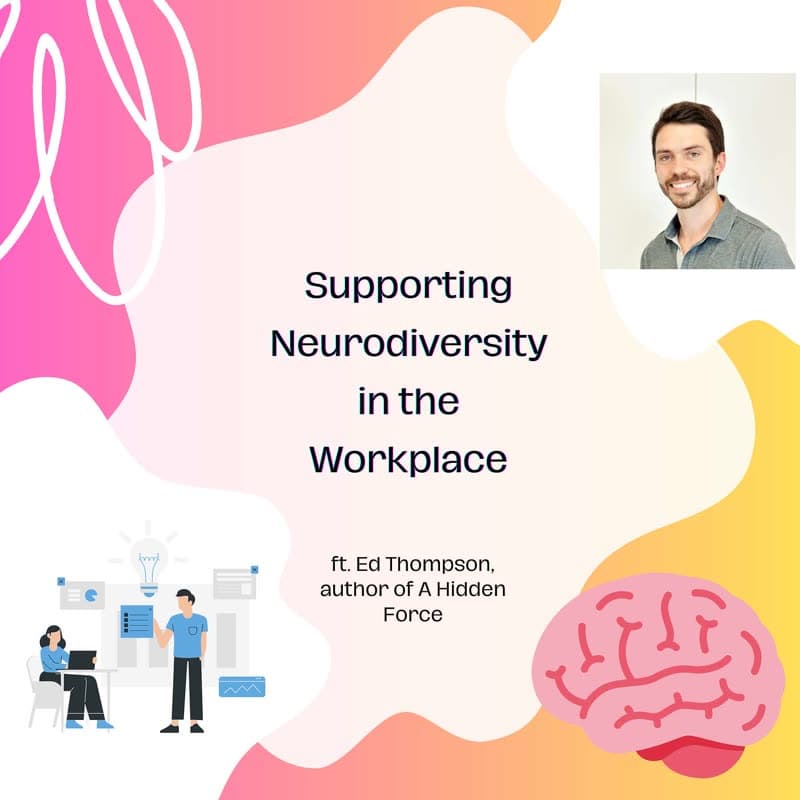
How To Support Neurodiversity in the Workplace ft. Ed Thompson, author of “A Hidden Force”
About this episode
In part 2 of our interview with Ed Thompson, he digs into specific strategies for supporting neurodiversity in the workplace.
You can find part 1 of our interview here: https://www.buzzsprout.com/2077817/episodes/14255819
Ed Thompson is the CEO and founder of Uptimize (uptimize.com), and the author of "A Hidden Force: Unlocking the Potential of Neurodiversity at Work". https://www.goodreads.com/book/show/124974772-a-hidden-force
Transcript
Full transcript · 3,699 words · about 18 min to read. Press a timestamp to jump to that moment.
It isn't simply about hiring, you know, a few autistic people here or there, it's about how do we hire in general, how do we embrace all of these different brains that we have and that we're going to continue to engage in our hiring processes. It isn't about, if you like, hiring people we don't have, it's about embracing everybody, whether that's in hiring or whether that's, you know, internal to our organisations.
Hey everyone, we're Nick and Sonja and this is Dyslexia Journey, where we help you support the dyslexic kid in your life. All right, and today we are excited to welcome Ed Thompson, who is the author of the book, A Hidden Force, Unlocking the Potential of Neurodiversity at Work. And again, I think that strength, sadly, can be a contextual challenge when it's not understood and appreciated in interviews, for example, where people can expect a certain type of answer, be a little thrown when they get a very different type of answer.
I think that's wrong. I think that should be, you know, embraced, but I think that's what happens. Or in work, you know, where a manager maybe expects a certain process to get from A to B. And actually, you know, what if this individual doesn't want to start at A, they want to start at D, you know, come back the other way. I think the lesson is focusing on the result over the how as much as possible, and letting different thinkers work in the way that suits them best to get there.
You know, in my day job, I'm a software engineer, and so I've worked in industry and gone through the hiring process as an individual. And I've also been a hiring manager and an executive at several different companies. And as we've gotten more into dyslexia advocacy, I've started to question some of the hiring practices. But then reading your book really brought it into sort of stark relief as to how, really, how bad most of the hiring practices are.
Like, not to sugarcoat it here, right?
So, you know, things like the culture fit interview and timed tests, you know, during a 20-minute interview or whatever. So do you want to talk a little bit more about that sort of hiring in general and what we can, what the problems are and what we can do to change that?
Yeah, and I think, I mean, to some extent, problems start right at the beginning, because organisations often kind of trumpet their diversity and inclusive credentials, but don't mention neurodiversity. And so I think there can be an issue simply in terms of attracting talent, where neurodivergent people think, well, you know, do they really want, do they really get people like me? Now, of course, candidate pools are neurodiverse, right? Humans are neurodiverse, so are candidate pools.
And of course, that's likely to include neurodivergent people. So, you know, this is important. This isn't about sort of specific disability hiring necessarily. It's important to think about these processes. But we can simply exclude people by not making it look like we care about people like them. When it comes to hiring specifically, I talk in the book, this idea of intentional hiring. That's not my invention. I think that's something that is a very kind of topical, popular now approach in hiring.
The idea of just really taking time to think about what are we trying to hire for? What are the outcomes and then what are the skills, experience that are going to make those outcomes most likely? And how are we assessing for those? And that sounds obvious, but that's not what happens a lot of the time. A lot of the time hiring, I think, can be lazy. Oh, let's just reuse the job description from last time.
You know, Steve's leaving. Well, how do we find another Steve? A lot of it is rapport based. You know, it's do we like this person? Hey, you know, team member, please interview this person. Tell me what you think. Oh, yeah. Good guy. OK, cool. That stuff shouldn't happen, but it happens way more than it should. And I think that can mean, you know, rapport, which shouldn't really be the key glue and it seems to be about, you know, skills and ability to execute is kind of given higher weight.
So this idea of intentional hiring, I think, really is the foundation of it. And I think that then needs to be paired with some awareness of neurodiversity and awareness that a candidate pool is neurodiverse and making sure that that can go to things like, you know, checking biases before an interview. So do you have a picture of a mental picture of a candidate? What does that look like? And are you genuinely open to somebody who presents completely differently?
Could be in terms of their skin colour, could be in terms of how they talk, how they hold themselves. Maybe they don't choose to speak at all in the interview and communicate by other means. You know, are we open to that if it's the best candidate? And then as well, some some techniques that we teach around how to ask questions inclusively, how to optimise the experience for candidates and so on. And that's something that neurodivergent people often describe as particularly stressful when they're kind of just left on the hook.
They don't know what to expect. Classic example. We improve that for neurodivergent people. We improve it for everybody. So, you know, it's a bit it's a big topic. I don't think people should look at it and think. That's so big, you know, we could never do anything about it. That's not true. The way that we approach it is very much, you know, making the people who are operating these processes realise how important it is and really kind of empowering them and equipping them to manage these processes every day in a way that just opens them up, you know, for the hundred percent and not the 80 percent.
Yeah, you also discuss in the book, you know, the idea that it seems like a lot of the times people are looking for someone sort of kind of well-rounded almost, too, which in a lot of cases with neurodiverse individuals, you know, dyslexics being one example, they might have very particular things that they are better at. And that that can be a great thing for a company to have someone who's really good at a particular thing, but then they might, you know, look weaker in a particular other area.
So this is remind I am just curious more about that. And then I'm wondering, sort of taking a step back even from hiring process, that perhaps their background and schooling might look a little different. And then that's leading me just to think about a quick dip into schools and anything that you any comments you would have around that as well.
The idea of the spiky profile is is in strong kind of currency when it comes to neurodiversity. The idea, I suppose, that, you know, let's think there's maybe 10 or so kind of generic work skills, different types of communicating and problem solving, being able to organize your work, time management. These are things that kind of probably going to be helpful in any work context. And a generalist might be 7 out of 10 across the board or have a reasonably kind of flat profile.
There's nothing that's a major weakness, but there's nothing that's a really dramatic strength. A neurodivergent person might be the opposite. They might be 10 for creative, right, as opposed to a 6. I mean, that's a big jump. If you're 10 for creative, you can bring a lot to your team. But, you know, maybe there are three for time management rather than a 7. You know, maybe there are three for written communication.
So I think that idea is something that we should acknowledge and we should embrace and we should embrace the value of somebody who's kind of capable across the board, as well as the value of somebody who might be particularly strong in some areas. And, you know, I think that relates as well to how we think about younger people as they're growing up in schools. And do we do we sort of slam them for, you know, their struggles or do we celebrate them for their strengths and achievements?
And I think that's I think that's really important. Okay, so one other interesting aspect of your book is you talk about sort of disability rights movement and how the sort of encouraging or recognizing neurodiversity in the workplace can, to some extent, come out of that. But I'm wondering, do you feel like the sort of emphasis of your of your book, the, you know, sort of recognizing neurodivergence is more akin to sort of disability rights or more akin to sort of equal access for underrepresented minorities or or something entirely different?
No, I say, yeah, it's an interesting, it's an interesting question. I mean, I think it's really important to acknowledge that as societies, we only have some of these words, neurodiversity and so on. And this newer, but, you know, apparently correct understanding of human brains through, if you like, neurodiversity rights or disability rights. And I think, you know, that's the foundation of this. I mean, long before I started working on this in the workplace.
And I think, you know, what greater inclusion at work is doing is advancing that cause and that cause continues and that cause continues across all different, you know, dimensions of society, including, including work. So I think that context is really important to talk about work more specifically.
The emergence of what I think of as the neurodiversity at work movements, a lot of people talking about neurodiversity at work came from some quite specific hiring programs in around 2015, 2016, 2017. And these were really hiring programs looking to hire autistic tech workers, largely, that were very much from what I would think of as the disability hiring model. And I think the disability hiring model is to some extent, you know, how do we hire people who can bring value, but we do a pretty poor job of hiring otherwise.
And I think that was the framework of these autism hiring programs and these autism hiring programs got a lot of publicity because never before had people seen organizations, big organizations say, you know, we actively want these neurodivergent skills and not just for back office roles. And, you know, I think that got a lot of prominence press coverage interest and that started a cycle where more and more people started disclosing, you know, we realized actually that organizations are neurodiverse anyway and so on.
So I think it's played that role, but I think also the emergence of enterprise resource groups and neurodiversity advocacy in these organizations and how obvious it is now that it isn't simply about hiring, you know, a few autistic people here or there. It's about how do we hire in general? How do we embrace all of these different brains that we have and that we're going to continue to engage in our hiring processes?
It isn't about, if you like hiring people we don't have, it's about embracing everybody, whether that's in hiring or whether that's, you know, internal to our organizations. Yeah, so I'm curious what, how would you distill down some top tips for what companies can be doing to take advantage of this hidden force of neurodiversity? And, you know, whether that's a principle or a very specific thing, what are some top things for them to consider doing?
Oh, it's a lot. I think, I think recognizing how important it is to them. And there's all sorts of misconceptions here. The idea, you know, we don't have anybody like that here, this kind of thing, which obviously is nonsense. And hopefully I've, I've explained why talking about it, I think is really important. Of course, that can start with leaders, but anybody in the organization can be a champion, can talk about their own experiences, but can talk about just the importance of this in general.
And many times allies, I think can play a strong role here too. I think it's important here just to kind of take a tangent. Most organizations, and I mentioned HR priorities becoming CEO priorities. Most organizations are already committed to people, well-being, belonging, diversity, you know, diverse hiring and so on. They realize those things are important. And I think that commitment is genuine. I think what they haven't always realized is what a major missing piece neurodiversity is and how actually embracing neuroinclusion is a way to live into all of those promises and all of those commitments.
I think you have to take steps, of course, to educate people, ensure resources are there. That's what we provide. We found 60%-ish of our learners when we start don't really know what neurodiversity is, which I think is, you know, is a problem. And you could see that being a problem as a neurodivergent employee. And, you know, do I choose to disclose? Well, more than half the people don't even know what this is.
So that's not a great start. So maybe I'll keep quiet. I think ultimately it's about really, you know, seeing neuroinclusion as, yes, an inclusion thing, but also a ways of working thing and just building this into the fabric of, you know, how teams work and then ultimately how teams work at scale. And I think it's not difficult to see that if you're an organization that can bring in different types of brains and then optimize their contribution, that's putting you in a pretty strong position in this very kind of competitive, fast-moving 21st century.
Yeah, definitely. On the flip side of that, what are some pitfalls to avoid for companies? I mean, there's many, as I said, there's lots of misconceptions that, you know, prevent action. I mean, I mentioned just the idea that this doesn't have anything to do with you. It does. Something we see organizations do quite a lot, which I don't think is that helpful, is kind of over-focusing on numbers. The idea as for diversity rather than inclusion.
And I think as organizations report their diversity to statistics, they sort of want to do that with this area too. And it's quite difficult. 90% of people typically don't choose to disclose off the bat from the reasons we've discussed. It's a very muddy picture. So I think sort of expecting people to disclose as kind of stage one is unrealistic and the wrong thing to pursue. I think we want to create this environment that's neuro-inclusive and then a truism of that is that more people will then disclose because they feel comfortable.
So you've got to kind of don't want to put the cart before the horse. We've talked about kind of seeing this only as a hiring thing. I think that's a sort of strategic mistake. This is really about the organization that you are, the teams that you are, the leadership team that you are, perhaps. You do a little show of hands there in terms of how people would most like to communicate or contribute to strategy.
You're going to get different answers. You're going to start thinking, gosh, actually, this relates to us as well. And then, of course, you know, the classic diversity and inclusion thing of the sort of the one and done, you know, we'll get a speaker and we're good. Well, it's better than nothing. But, you know, that's not really kind of changing the fabric of the organization. So I would say, you know, do it, do it properly and you'll be amply rewarded.
Yeah, I feel like overall, you know, partly from your ideas and your organization and then, like you said, the fact that there's at least some awareness already foundationally with companies, it sounds like the outlook's pretty good. I'm just curious to hear. Yeah. So you have more of the pulse on it here. Like, how do you feel like the outlook is for this, maybe even a time range? I don't know if that's possible to predict in terms of things changing and shifting and more companies getting online for it and perhaps even with dyslexia or dyslexic individuals specifically as well.
I believe in the work that we're doing and what we're seeing. I have seen the difference between the world in, say, 2017 and the world now. And I do think this is an improved world with more awareness and there's more organizations I can point to and say, I think that's an organization that cares about this and, you know, is doing it properly. So I have an optimism based on that. I would echo the concern that our speaker yesterday at our Optimize event shared around the demonization of some other minority groups at the moment because of the intersectional, you know, factors there.
And I think that's, you know, that's, of course, an issue for some. But generally, I try to be positive. I think, you know, I've seen the impact of this and how profound it is at an individual level, at an organizational level. Part of the book was sharing that and saying, hey, look, what happens if we do this? And I think I have a sort of entrepreneur's, you know, optimism to some extent as well that, you know, keeps me getting up and working on this every day.
Of course, it needs everybody, you know, to be part of this as well. And being a champion, being an ally is so important. We can spot this and I can write a book about it and we can project this into the world and be thought leaders as we are. But in every case, when we work with an organization, somebody or a group of people have spotted this as an overlooked area themselves.
It's not in the job title, but they've said we want to do something about this. And, you know, they're the heroes as well. And, you know, if you're listening to this and you work in an organization, you can be that person, too.
Yeah, I mean, it really is. And you lay this out really well in the book. It makes it so obvious that this really is win-win for everyone. And so I think it's frustrating sometimes when we, you know, not everyone sees how obvious that is. But, you know, it's good to hear that you feel like that you have a positive outlook and that things are changing.
So I guess as we wrap up here, any final thoughts? And then also, if you want to let our audience know a little bit about what you do at Optimize and where people can find you online. Yeah, again, well, thank you for having me. And it's a great conversation. And I suppose for final thoughts, you know, I always ask, you know, what can I do? Right. And I've kind of talked about being a champion, being an ally, making the case for action here.
I think you'd be surprised if you're listening to this podcast and you're passionate about this. You may feel, well, look, nobody else cares about this in my team workplace. And, you know, I've been going on about 60 percent of people don't even know what it means. But actually, there is this huge kind of latent affinity group or an even latent demographic of neurodivergent people who don't want to share it. So what we've tended to see with organisations is as people start to be allies and be champions, that latent interest, you know, starts to bubble up.
And surprise, surprise, the COO says, oh, I'm dyslexic, actually. And I've never told anybody, but I want this to be my big priority for 2024. And suddenly you can't do things fast enough. So that's also part of my optimism. And I think also, you know, I don't labour this too much, but I think there's a lot you can do here without having that sort of territory where you have to talk about specific labels, specific identities, which I know people are uncomfortable with.
So just checking in, in terms of wellbeing, you know, how are you doing today and kind of modelling that wellbeing piece on yourself and talking about how you're feeling, just talking about ways that you like to communicate, problem solve, work and so on, and letting people share that maybe theirs are different. These are all ways that we can, in a sense, contribute to neuroinclusion without feeling like we have to go on that kind of icy ground of, you know, am I going to say the wrong thing?
As far as us, yes, I've alluded to, and obviously the book very much draws on the experiences I've had building Optimize. So we are at Optimize.com, U-P-T-I-M-I-Z-E.com, and we train organisations of all sizes. We worked with Accenture, IBM, I mean, it doesn't get much bigger than them, but we've also worked with seven-person non-profits as well. So we work with all organisations to help you become more neuroinclusive and see the benefits of that.
And you've also been kind enough to mention my book, of course, which came out earlier this year, A Hidden Force, Unlocking the Potential of Neurodiversity at Work. And that's available online on Amazon, Barnes & Noble, and so on, in some different formats.
All right. Well, Ed, thank you. We really appreciate you coming on the show and sharing all this information with us. And for all the work you do on such an important issue. Thank you for having me. Thank you. Thank you. Thank you.
More from the show
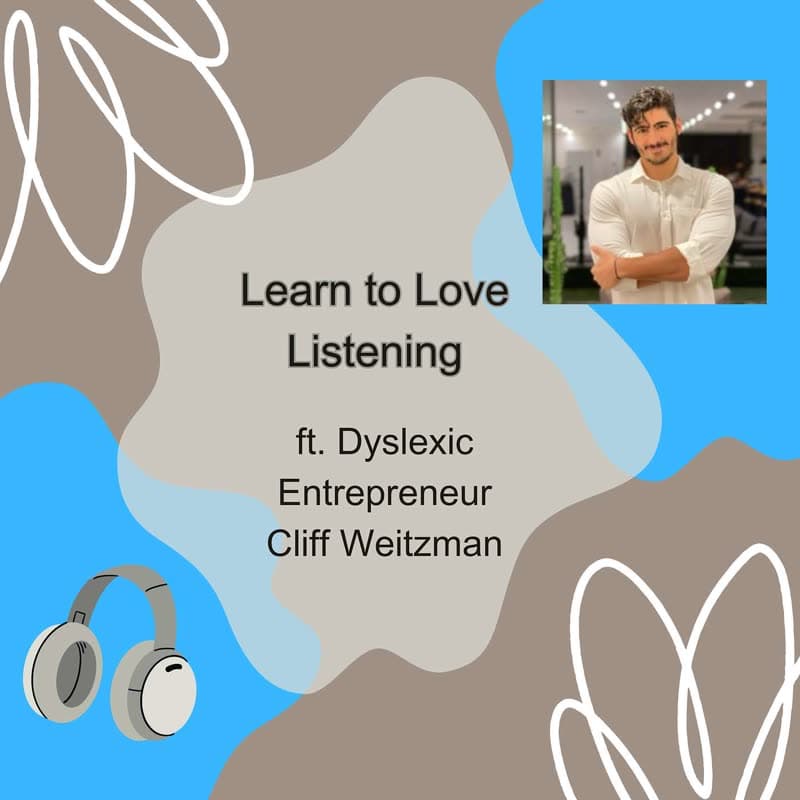
Learn to Love Listening ft. Cliff Weitzman, Dyslexic Founder and CEO of Speechify
In this installment of our Dyslexic Voices series, Cliff Weitzman, founder and CEO of Speechify (https://speechify.com/), tells us about his experiences growing up dyslexic, and shares his advice for how to succeed as a dyslexic child and adult.
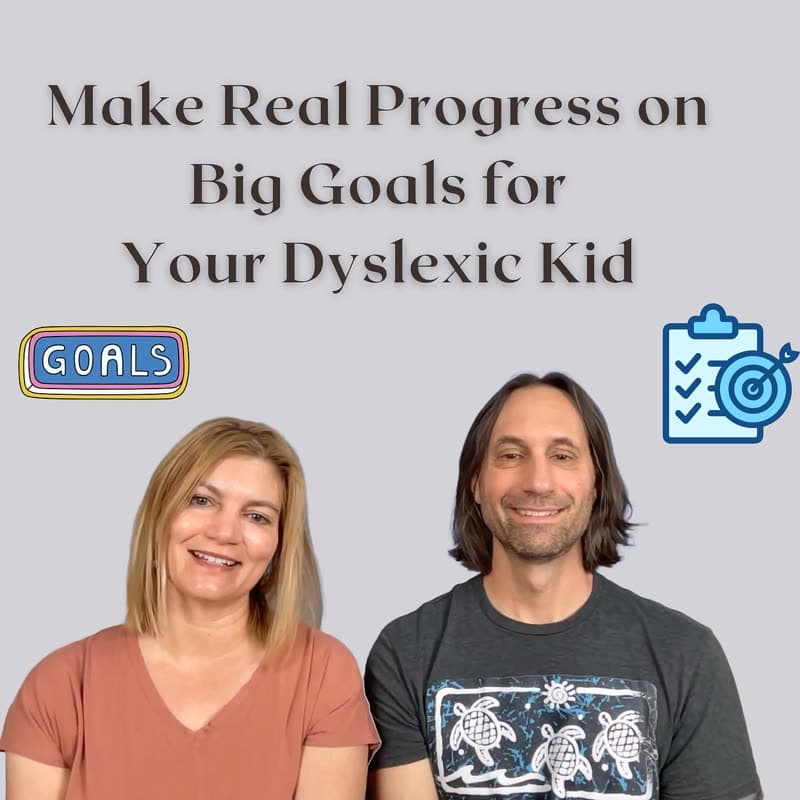
Make Real Progress on Big Goals For Your Dyslexic Kid!
We all have goals for our dyslexic kids, but they often seem overwhelming and out of reach. In this episode we provide specific, practical tips for organizing the goals into smaller chunks and making daily progress.

The Attacks On Your Kids’ Rights to a Free Appropriate Public Education ft. Attorney Laura Heneghan
With all the changes in the US recently, it’s hard to keep track of all the implications. In this episode we dig into the changes at the Department of Education, executive orders, lawsuits, and more in order to understand how these changes could directly affect your kids!
Never miss an episode
New episodes every two weeks. Follow wherever you listen.