
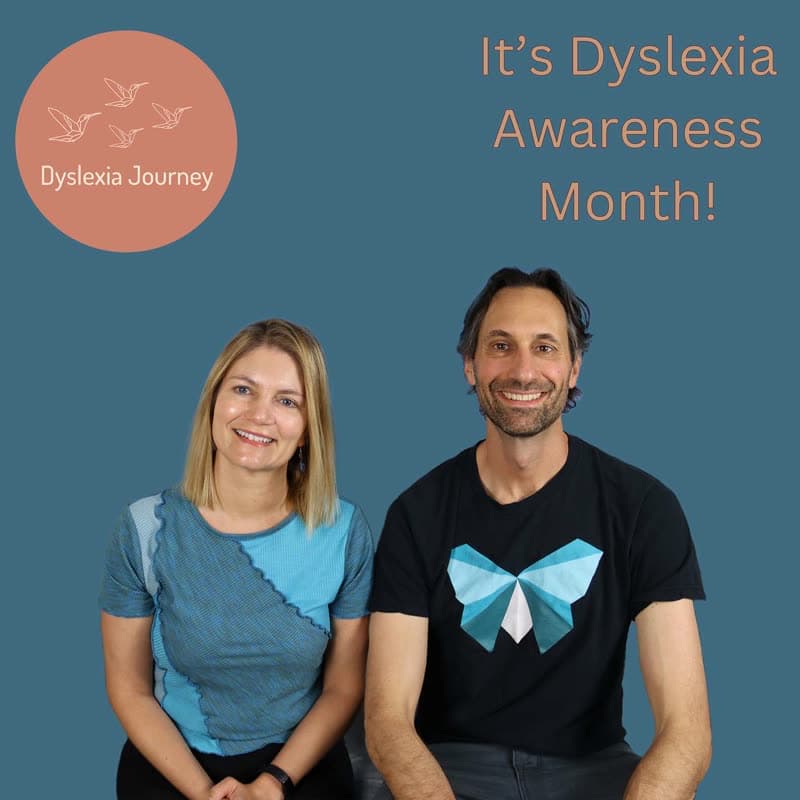
About this episode
For #dyslexia awareness month, we share a few statistics about the surprising prevalence of dyslexia. #dyslexic #dyslexiaawareness #neurodiversity.
Transcript
Full transcript · 295 words · about 1 min to read. Press a timestamp to jump to that moment.
October is Dyslexia Awareness Month, and you might be surprised at how many people actually have dyslexia.
Hey everyone, we're Nick and Sonja, and this is Dyslexia Journey, where we help you support the dyslexic kid in your life. So October is Dyslexia Awareness Month, and in this short video, we're going to talk about just how prevalent dyslexia is. All right, let's jump in with some statistics. Approximately 20% of people have some form of dyslexia. That means that one out of every five people that you meet actually has dyslexia.
And so dyslexia accounts for about 80 to 90% of all people with learning, some form of learning difference. So if you compare that to something like autism, about 3% of the population, or about one in every 36 people, is autistic. And if you compare to ADHD, that's about 10% of the population. So, and not to, you know, we definitely don't want to pit these conditions against each other. But just to give you an idea of the scope, it feels like, at least to us, that dyslexia is just not really talked about that much in media.
And so I think part of the purpose, obviously, of Dyslexia Awareness Month is to raise that awareness. And so I think it's important to realize that there are actually twice as many people out there with dyslexia as with ADHD. And a lot of us know someone who suffers from migraines. And that condition affects about 10% of people, 17% of women. And so, again, there are more dyslexic people than migraine sufferers. Okay, so those are just some quick statistics about dyslexia for Dyslexia Awareness Month.
Hopefully that gives you a little bit greater perspective of how widespread this condition is.
More from the show
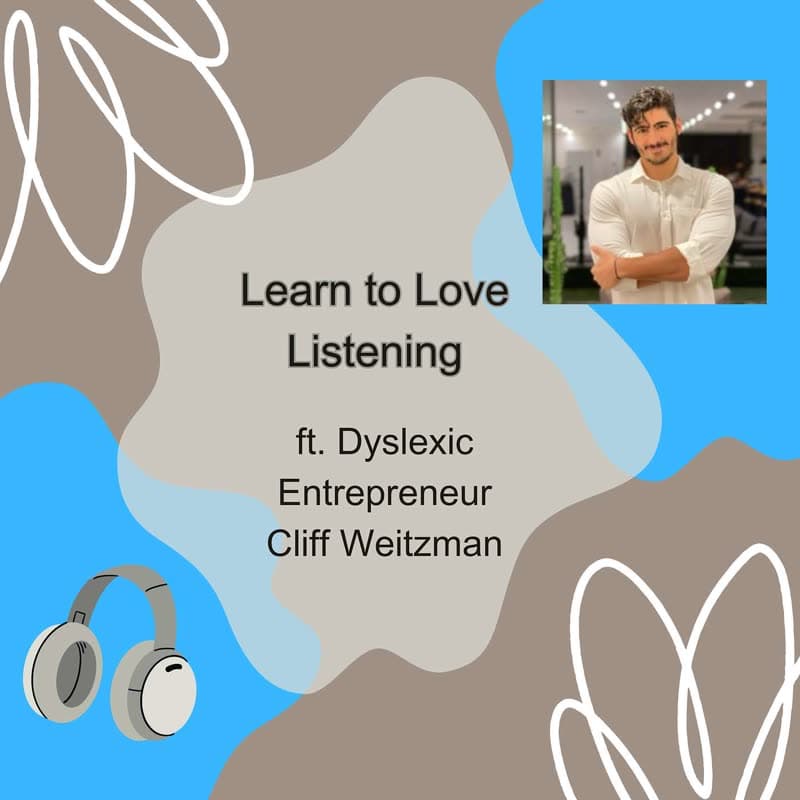
Learn to Love Listening ft. Cliff Weitzman, Dyslexic Founder and CEO of Speechify
In this installment of our Dyslexic Voices series, Cliff Weitzman, founder and CEO of Speechify (https://speechify.com/), tells us about his experiences growing up dyslexic, and shares his advice for how to succeed as a dyslexic child and adult.
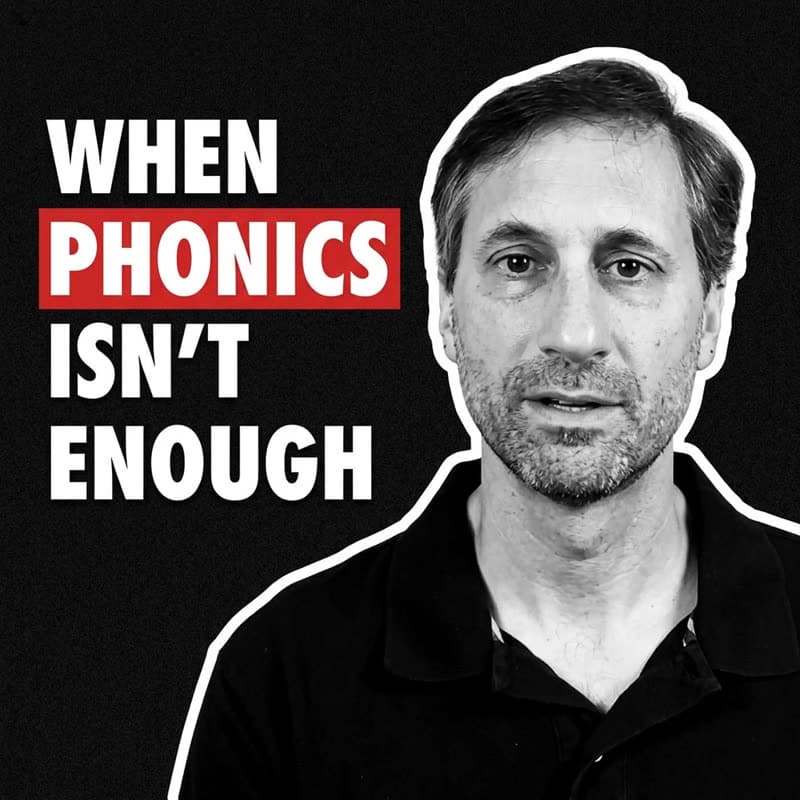
When Phonics Isn't Enough
In the world of reading instruction, phonics has long been hailed as a cornerstone for teaching children to read, particularly for those with dyslexia. However, a recent article raises an important question: is there a limit to how much phonics can help as students progress into middle school? In this episode, we'll…

She Didn't Know She Was Dyslexic Until She Learned English ft. Haiyu Zhang
Haiyu Zhang grew up in China and moved to the US as a teenager. You can find her online at https://hz2784.github.io/.
Never miss an episode
New episodes every two weeks. Follow wherever you listen.