
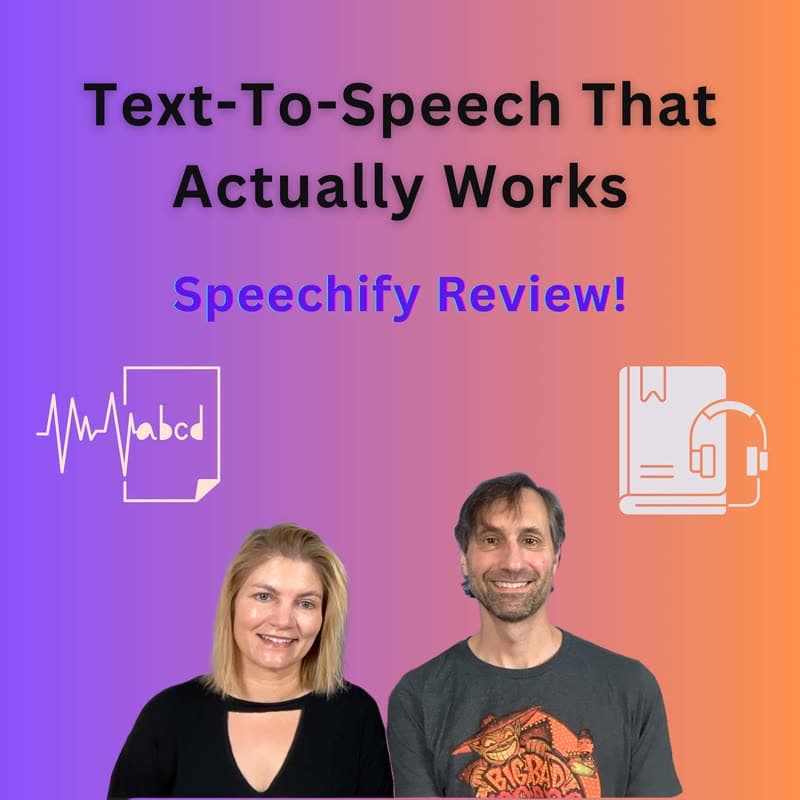
Speechify Review: Why This Text-to-Speech App Is a Game-Changer for Dyslexics
About this episode
We are happy to recommend the text-to-speech app, Speechify, for dyslexic students and adults!
Check out our previous interviews with Speechify founder Cliff Weitzman here:
https://www.buzzsprout.com/admin/2077817/episodes/14386818-learn-to-love-listening-ft-cliff-weitzman-dyslexic-founder-and-ceo-of-speechify
https://www.buzzsprout.com/admin/2077817/episodes/14431089-solving-dyslexia-ft-cliff-weitzman-founder-and-ceo-of-speechify
Note: we were provided a free license to use Speechify in exchange for an honest review.
Transcript
Full transcript · 2,755 words · about 14 min to read. Press a timestamp to jump to that moment.
Today on Dyslexia Journey, we are excited to do something that we don't do very often, which is review a particular product, a technological product, that can help you as a dyslexic person in your life.
Got me diagnosed when I was in third grade, and it was the most relieving day of my life, because I finally had like kind of a place to hang my hat and say, see, I told you, I'm not lazy, definitely not stupid. I just learned differently, like that's totally okay. Be dyslexics, we were often, you know, just set up for failure, because, you know, we were given books and tasks that really are not appropriate for the level that we were at.
So, how do you expect anyone to be open to learning, when their entire relationship with reading, with learning, is physical pain? Wish I had understood when I was younger that the fact that my brain worked differently than people meant that I would be good at things in ways that other kids were not going to be good at. I must assume, I can't be dyslexic, because letters don't jump up and down for me.
Dyslexia is not a disorder. It is not a disease. Once you sort of own it and embrace it, then you can have the power to deal with it. It's sort of empowering and also enriching to the whole community. To those who don't understand what dyslexia is, that it's not a negative, it's not a problem, it's, like we keep saying, superpower. Hey, everyone, we're Nick and Sonja, and this is Dyslexia Journey. And as I said in that brief intro, today we are going to review a particular technological product that we think is going to really help you, whether you're a student, whether you're, you know, an adult dyslexic person out in life.
So, as you can tell, like, we are giving it a positive review. We'll just say that right off from the beginning. But we'll go in this video, of course, into more pros and cons and specific details about it as well. And, drumroll, would you like to say what the product is? Sure. The product is Speechify, which is a text-to-speech reader. And before we dive into the review, we do need to disclose that we were given a free license to use the product in order to give it an honest review.
Right. And we also, the reason we got interested in the product in the first place and started to find out about it, you may have seen ads for it now because I think, you know, it's been out a little while now. And I see some YouTube ads sometimes, for example, but was that we interviewed Cliff Weitzman. So, this was a product who's the founder and, you know, created this product. And he himself is dyslexic.
And so, to me, I think that that, like, probably is influencing the product a lot and why it's so useful because he has that mindset of how it can be most useful. But, like I said, we'll get into more nuances of how you use it, some of the benefits that we see, which is why we're being so positive about it. But then also some of the things that, you know, can be a little more challenging or little quirks and things to keep in mind if you're going to use it.
Okay. So, let's jump into a little more about, we said text-to-speech, but, like, a little more about what this product is and, I guess, first of all, like, why you would use it, some of more of the purposes for why you would use it. Yeah. So, text-to-speech is really important. For people with dyslexia, because, as we've discussed many times, and as those of you who have dyslexia or have children who have dyslexia are aware, often dyslexics, oral comprehension is much quicker than when they, within their reading comprehension.
So, listening to content is generally a better, a quicker, more efficient, and really just better for actual comprehension, a better method for dyslexics to take in information. Right. And, of course, someone might use it who's not dyslexic, just out of preference, or because they want to listen to something at a faster speed and take it in faster than they can read it, you know, for all kinds of reasons. But it is a very important tool for dyslexic people.
Yeah. And this is across kind of all written media. And so, obviously, for novels and nonfiction popular books, there are several ways to obtain, like, a professionally read version of that book, like, through Audible with Amazon, for example. But the gap is with online content, so a random web page, a random news article, with print content. So, for example, the insert that you get with your prescription medications, or... Just some kind of PDF someone sent you.
Yeah. And then, in the case of kids or students, textbooks is a really big gap there. Right. And sometimes you can get audio versions of textbooks. We'll get into that a little more later. But there are some advantages to Speechify, even in that case. And, like I said, we'll get into that in a moment here. So, like we just said, you could do it... You could use Speechify to read from a PDF or EPUB or some other format that you've uploaded.
You could also read it from a web browser. So, if you have a digital version of a book or something else. And then, you can also use it with a physical copy of the books. You're able to use your phone's camera. And, actually, it can read it from a picture that you take. Yeah. So, it's actually super key in our experience and in our daughter's experience. It's actually super key to have those kind of three different ways that you can read content.
Right. And it's almost like until you start doing that, you almost don't realize all the different formats that we do encounter information in. But we really do. Right. So, I guess that transitions right into, you know, why we like this product so much. So, really, it's that versatility is the first thing we'll talk about. That you can do digital format. You can use physical format. It can be all these different types of content.
So, that versatility is really important and makes it this sort of all-around tool that you can use as your main tool for speech-to-text. One other thing that we really like about speech-to-text is that it's a fairly mature, sophisticated product with most of the features that you would want. So, we talked about the versatility already of being able to read from a physical copy or online from a web browser. There's different ways to do it.
There's, like, a Chrome extension. There's an app that you can download if you have a Mac. And there's apps for your mobile devices as well. So, you can use it kind of however you prefer. One of the key features is being able to adjust the speed. And this is something that when we interviewed Cliff Weitzman, he really emphasized, that you can generally listen to stuff at quite a bit of a faster speed than you might initially think.
So, you generally, a regular reading speed or a regular talking speed like we're doing now on the podcast is actually pretty slow once you start listening to more stuff. And so, I think a lot of people who use speech-to-by start maybe even on 2x speed and then can even go up from there. And so, it's actually turned out to be, not only is it a better way for dyslexic people to get the information, it's actually faster.
Like, it's actually faster than a non-dyslexic person reading to themselves. Or it's faster than having it, having a reader, a live reader, reading it to them. And again, this could take a little, you know, getting familiar with doing that. But it is a potential really big benefit of using a system like this. Yeah. And I'll just add to the sophistication and maturity of the product that it, like, it just works really well.
We're going to get into a couple of cases where there's little nuances with the things you're trying to read. But, like, it's a very good product. So, it's already, like, far in development. It's not like you're getting some beta version or something. So, it works well. The number one pro to using Speechify that we're going to talk about here is the realistic speakers that are the ones who are going to be speaking this text to you.
So, it's kind of amazing, right? They're using these voices. You can actually pick voices of celebrities, for example. And it's so natural sounding. So, on the other hand, sometimes with audiobooks, for example, audiobooks and textbooks that our daughter has been given, it can be a very monotone speaker. And so, it's amazing and such a huge leap in technology in my mind that now there can be not just this robotic voice reading anything to us, but it can be this really personal, realistic sounding voice because that makes a huge difference.
It's not just that it, like, feels better to hear. It actually makes a huge difference in absorbing the content because if it sounds natural in speaking, we're able to understand the meaning better. Right. Exactly. And so, in her daughter's case, in college, I mean, she's actually using Speechify instead of the audio versions of the textbooks that she was provided by the disability services. Right. Exactly. And she's able to do that, too, because, I mean, I guess we haven't talked about every single feature, but, you know, it has features, too, like where it can highlight certain areas.
And so, it can be used that way pretty easily, even though some people use it, you know, just for a novel or something. It can be used very, very well with schoolwork. All right. Should we get into just a couple of these little caveats? Yeah. Not even really caveats. It's just something to keep in mind because, of course, whenever we're working with something, it's always going to be, like, occasionally there's some little troubleshooting kind of thing.
It's more like that. And I would say, like, kind of the overall theme of this is that sometimes a particular, pretty rarely, I would say, so far in our experience, at least, but pretty rarely something that we want to have Speechify read to us has some little nuance to it that means not that we won't figure it out, but that it won't just, like, happen automatically. It'll have to be, like, a couple steps that we take to figure out how to make it so that we can get Speechify to work with it.
Right. So, the first issue is with, just sort of the library of audiobooks, with, in Speechify, they do cost extra and the prices that we've seen are generally a little bit higher than, on Audible, which is owned by Amazon. so, generally it's probably more cost effective to buy an audiobook or get a subscription. From Audible if you're doing a lot of, like, fiction listening. Like we said, I think the reason we feel like it, it's the pros that way, the cons of getting Speechify is the versatility, however, though, because there's going to be these other kinds of things that you don't get in audiobook version like that.
Yes. Yeah. Okay, and so the, the second, kind of, area where Speechify has, oh, or, well, this is just the first area where Speechify has a little bit of trouble, actually, is with, if there are kind of, like, fancy, readers for a book, in a web browser. So, for example, even Google Books is a good example of this that you can look at for free, where, in the web browser, they've implemented sort of a more full-featured reader.
Speechify, has trouble with that kind of, with that kind of interface of, it can still somewhat read it, but it's hard to, get it to start in the right place. It kind of just reads the whole web page instead of, reading just the content of the book that you want. and so the workaround for that is, like, if you're really having trouble, is you can actually just take a picture of the page and then have Speechify read it from the picture.
Right. So it's like that versatility, again, is coming around to help with any sort of troubleshooting. Right. and similarly, and then the next one we're going to talk about actually has the same workaround. Yeah. Which is that we've encountered, it's pretty, you know, maybe a more obscure kind of text, or I don't know if this was a translated thing, but, where you can actually see this visually, but it's apparently there were spaces in the middle of the word, like in the, in the actual text.
And so then, of course, Speechify was picking those up on the, in its digital reading format. And so that was making it like it was chopped up words, but that same workaround works. So, yeah, you can just take a picture of it and then have Speechify use the, the OCR, just from the picture, the optical character recognition to, to then read it as well. Right. So, yeah, so it's very versatility really helps with, like, solving any problems like that, too.
Yeah. And so I would also recommend, if you start using it, to try to familiarize yourself with that versatility, with using it in different contexts, because that way, if you're, you run into some, an issue, and let's say you're on a timeline or something, like, you'll already be familiar with how to quickly do that work. Yeah. and then the last issue that, that, well, actually our daughter has run into is, difficulty in finding page numbers within Speechify.
So if you're trying, if you have a whole textbook that's in, for example, a PDF or EPUB format that you've uploaded into Speechify, you'll often get an assignment, like, okay, read pages 505 to 550.
So that is sometimes difficult to match up those page numbers and find the right pages within the Speechify interface. And, you know, again, it, it just takes a little, just you, if you know that could potentially be a problem, just, just adding in a little bit of time for figuring that out is all that you need to really do there. Yeah. But overall, Speechify has been, proven to be our daughter's most important accommodation.
I think that's safe to say. It's safe to say. Yeah. so the use of Speechify is really, just really imperative for her, her schoolwork right now. And yeah, we, we wish we'd actually started using it earlier, like with anything. And I mean, you'll, you'll probably experience this in family life or just otherwise. So I guess an adult who's busy and in life to like start using something new, there's always that little bit of barrier to like, okay, now I'm taking it on and getting used to it.
I would say it comes pretty quickly with this though. So, you know, try to, try to start using it as soon as you can. Yeah. And if you're not a student, if you're an adult, who's dyslexic, Speechify is, is quite useful for, I think, or it could be quite useful. I guess I shouldn't say that categorically since I'm not dyslexic myself, but, for reading, articles online, for reading physical, content that you get, et cetera.
Yeah. So anyway, so we're very, very happy to give it this positive review and hopefully you'll, you'll try it out and, and find that it is really helpful to your life too. Yeah. And we'd love to hear suggestions of other, products and tools that are useful. Yeah. What are the ones that you've found most useful in your life? Yeah. Especially as, you know, as the technology has been progressing so much in these last few years.
Yeah. Email us at, parenting Dyslexia Journey at gmail.com.
We'll see you next time.
More from the show
When Phonics Isn't Enough
In the world of reading instruction, phonics has long been hailed as a cornerstone for teaching children to read, particularly for those with dyslexia. However, a recent article raises an important question: is there a limit to how much phonics can help as students progress into middle school? In this episode, we'll…

She Didn't Know She Was Dyslexic Until She Learned English ft. Haiyu Zhang
Haiyu Zhang grew up in China and moved to the US as a teenager. You can find her online at https://hz2784.github.io/.
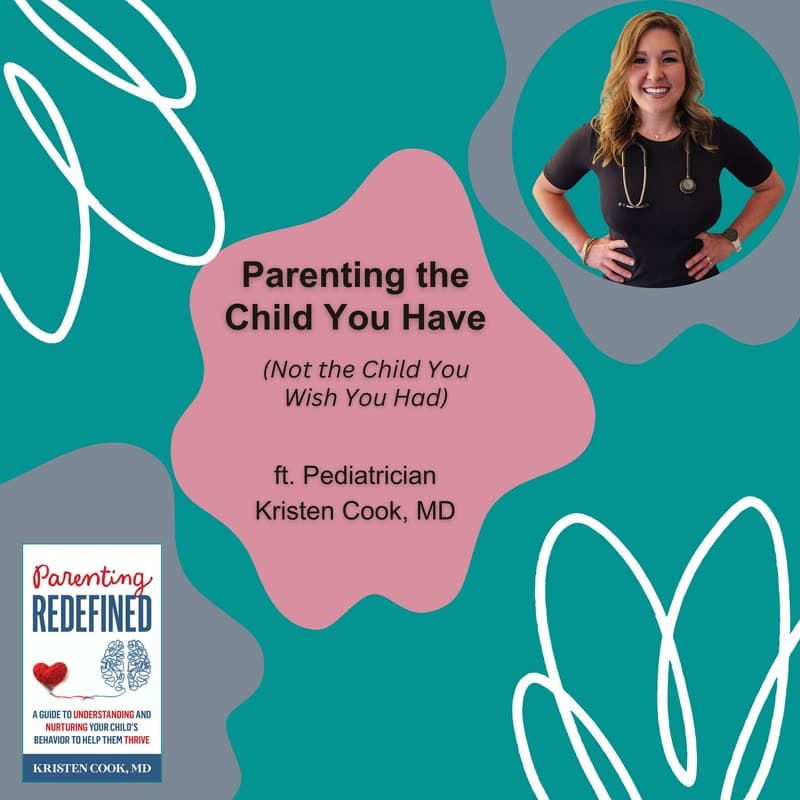
Parenting the Child You Have ft. Pediatrician Kristen Cook, MD
Have you ever wished that you could sit down with your child's pediatrician and talk about dyslexia, neurodiversity, and parenting? Well, this is your chance! We recently enjoyed a conversation with Dr.
Never miss an episode
New episodes every two weeks. Follow wherever you listen.