
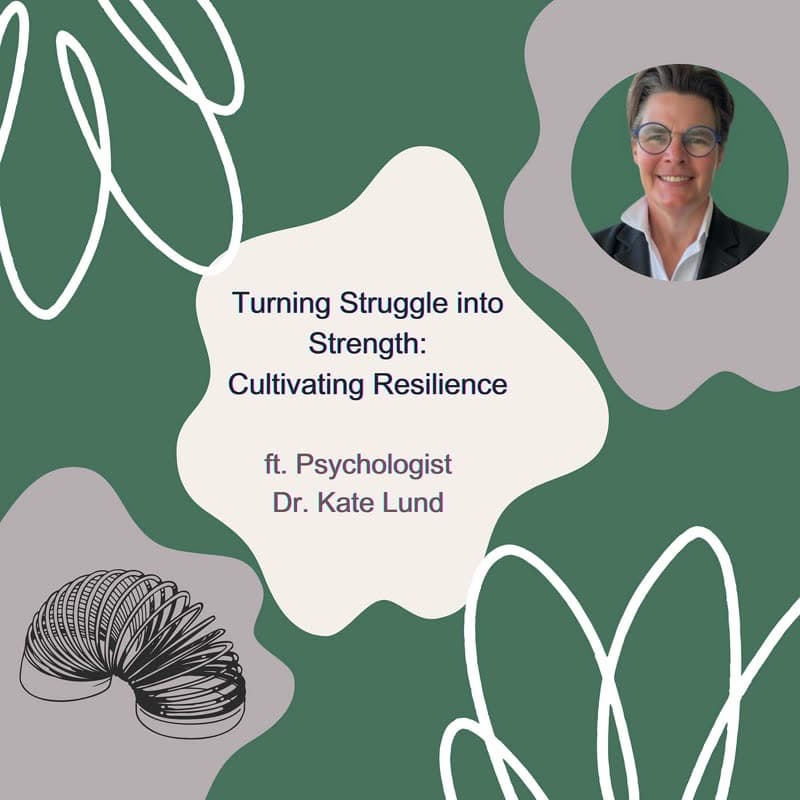
Turning Struggle into Strength: Cultivating Resilience ft. Psychologist Dr. Kate Lund
About this episode
Dr. Kate Lund is a licensed clinical psychologist of 15 years, peak performance coach, best-selling author and TEDx speaker. Her specialized training in medical psychology includes world-renowned Shriners Hospital for Children, Boston, Massachusetts General Hospital, and Beth Israel Deaconess Medical Center, all of which are affiliated with Harvard Medical School. She uses a strengths-based approach to help her clients improve their confidence in school, sports and life while helping them to become more resilient and reach their full potential at all levels. She is also the author of Step Away: The Keys to Resilient Parenting and has a podcast called ”The Optimized Mind.”
You can find Dr. Lund online at https://www.katelundspeaks.com/
Transcript
Full transcript · 5,465 words · about 27 min to read. Press a timestamp to jump to that moment.
You know, oftentimes we think of resilience out there, you know, bouncing back from a singular challenge as it comes up. Oh, we were resilient and we can move on. But this is really more than that. It's more like a lifestyle, sort of a baseline sense of being level, being even, optimizing yourself as a parent within your own unique context by integrating strategies and tools and mindsets. It got me diagnosed when I was in third grade and it was the most relieving day of my life because I finally had like kind of a place to hang my hat and say, see, I told you, I'm not lazy, definitely not stupid. I just learned differently. Like, that's totally okay.
We dyslexics, we were often, you know, just set up for failure because, you know, we were given books and tasks that really are not appropriate for the level that we were at. So, how do you expect anyone to be open to learning when their entire relationship with reading, with learning, is physical pain? I wish I had understood when I was younger that the fact that my brain worked differently than people meant that I would be good at things in ways that other kids were not going to be good at.
I just assumed I can't be dyslexic because letters don't jump up and down for me. Dyslexia is not a disorder. It is not a disease. Once you sort of own it and embrace it, then you can have the power to deal with it. It's sort of empowering and also enriching to the whole community. To those who don't understand what dyslexia is, that it's not a negative, it's not a problem, it's like we keep saying superpower.
Everyone, this is Dyslexia Journey, we're Nick and Sonja, and today we are so excited to welcome Dr. Kate Lund. Let me read you a bio for her. So, Dr. Kate Lund is a licensed clinical psychologist of 15 years, a peak performance coach, best-selling author, and TEDx speaker. Her specialized training in medical psychology includes world-renowned Shriners Hospital for Children, Boston, Massachusetts General Hospital, and Beth Israel Deaconess Medical Center. All of which are affiliated with Harvard Medical School.
She uses a strength-based approach to help her clients improve their confidence in school, sports, and life, while helping them to become more resilient and reach their full potential at all levels. She is also the author of Step Away, The Keys to Resilient Parenting, and has a podcast called The Optimized Mind. Welcome, Dr. Kate Lund. Thank you so much for having me. I really appreciate it. So, I wanted to start off, we'll get into, you know, some more specifics and more of your background and how you came to this soon.
But I kind of wanted to start with this quote of this phrase that's on your website, which really struck me, which is about your work, finding incredible possibility on the other side of challenge. So, I was thinking we could just go a little big picture, and I was wondering if you could speak to that at the beginning here. Yeah, absolutely. Well, so, that really comes from, and we can talk about that later as well, my early experiences as a child.
But really, the foundation of my work is helping folks to see the possibility on the other side of challenge. And finding a way to navigate through and beyond the challenges so we can see and then grab on to the possibilities that are out there for us is really, really vital. And I truly believe that. I believe that's at the core of our ability to maximize our potential in our own unique context, regardless of, you know, whatever that context looks like for us.
Yeah, and it's interesting because a lot of the times on this Dyslexia Journey, we'll speak about, you know, for example, the strengths within dyslexia and things like that. But I wouldn't say we, like, as often talk about the actual sort of, like, lining on the cloud, you know, silver lining on the cloud of going through challenge, which, you know, seems to be more akin to your work. So I think this will be good to delve into further.
Yeah, so let's dive into your background then. So you alluded to challenges in your childhood. And I assume that's kind of what ultimately led you to this particular focus. But we'd love to hear more about that. Yeah, absolutely. So it's really, you know, I've come to this work, I really believe, because of what happened in my childhood, sort of sets a foundation. And it's always kind of a placeholder in my mind, like, okay, this is how we're helping folks move forward.
I was diagnosed with a condition called hydrocephalus when I was four. And hydrocephalus is when the cerebral spinal fluid isn't circulating as it should, when pressure builds up on the brain. And it was really a hard time, obviously, for me, but also for my parents. You know, it was a time in the mid-70s, imaging technology isn't what it is today. So it took a while to figure this out. And they finally figured it out.
And the good news is that hydrocephalus is managed with something called a shunt. So a little drain or pump that's inserted in the ventricles of the brain circulates the fluid for us when it can't circulate on its own. And that's the good news. The bad news is that shunts break. So that meant a ton of time in and out of the hospital during, you know, through my early years. And it was hard, you know, coming back to school, looking, feeling different, missing a ton of content.
So being behind academically. But really, it was the looking different piece. You know, I'd have to wear this huge hockey helmet when I was skating with my friends at recess. Kids laughed. You know, it was hard. So I think that was my, well, I know that that was my early foundation and really wanting to understand and being drawn to helping other people through challenge. You know, figuring out myself, how to navigate challenges.
And I had a great support system. And that was key. My parents, my teachers, the parents of my friends helped me to focus on what I could do as opposed to what I couldn't do. And that's actually another really core concept. So all of that comes together and has led me over many, many years to where I am today. Hmm. Yeah, that must have. I can't imagine how challenging that must have been as a four-year-old.
Yeah. And beyond. And beyond, yeah. Yeah. Yeah. Yeah. Tell me a little bit more about your work and how you got into sort of your educational background and then how you got into resilience specifically. Yeah, absolutely. So, you know, the core of resilience goes back to those early experiences. I was really interested in understanding people from the get-go, right? So I was drawn to, I took psychology classes in high school. I volunteered at the local hospital.
Just things like that were always something that were kind of on my mind. I also worked at a local radio station where I was put out on the street sort of to interview people about sort of events going on in town. So that was another avenue that I really was drawn to understanding people through that lens. And then college psychology, I studied psychology, and that was sort of my main focus. I had a really great opportunity in college to do some very interesting research in health psychology with one of the professors.
And here's the thing, I was not ready to go back to graduate school when I graduated from college. So I had a minor in journalism, which was another lens I was looking through to understand people and understand sort of what people were about. And I ended up interviewing a lot of people in my work at the radio station, as well as through a semester I did at American University in Washington, D.C., my senior year of college.
And I actually was fortunate enough to have an internship at the White House. And it was so cool, you know, I was able to see journalism and journalists working in real time. I mean, my job was obviously setting up chairs on the White House lawn for news shoots and stuff like that at four in the morning, which was awesome. Like, I loved it. I loved every minute of it. But it did let me know that that was a little bit fast-paced for me.
The hair, the makeup, it was way too much. So my path kind of moved after that experience to a marketing and PR role where I worked in entertainment with the Learning Channel, Discovery Channel, and PBS within a firm, helping with some of their programming and working with talent and setting up their interviews and that sort of thing. Another cool experience in understanding people and figuring out how they got to where they wanted to be.
And then I did that for about four years, met my husband, and we decided to move to Boston. And at that point, I knew that it was time for me to go back to graduate school and start my journey to my goal all along of becoming a licensed clinical psychologist. So that was sort of the beginning and sort of the foundation leading up. And then in Boston, I had amazing experiences. And I really solidified my interest in really delving into this idea of resilience and what helps folks to move through significant challenges.
And my training in Boston was in the medical domain. So I worked in all of these hospitals. Most pivotal one was my two-year fellowship at Shriners Hospital for Children in Boston where I was working with kids who had experienced catastrophic burn injuries. And working with those children and those families in terms of how to get through that initial phase for the parents because the kids were most often still in a medically induced coma at that point.
But how to help the families at that point of the journey and then how to help the kids when they were in a rehabilitative phase think about what was possible for them moving forward. What was their new normal going to look like? How are we going to help them hold on to the strengths that they had within them to work through these challenges moving forward? And I had an opportunity there to work with some great supervisors who were doing some really groundbreaking research in this area.
And that's really where this interest solidified. And I've built on it ever since. Well, I'm wondering if you mentioned strength specifically. I'm wondering what you would say if you're able to put it into a short phrase, you know, short couple sentences. Like what is really cultivating resilience? Like what do you see as fundamental to that? The first thing, really the fundamental thing is managing your stress response. Starting from a level space and helping ourselves as parents as well as our kids to do that.
Because if we're starting up here on a day and we hit a challenge, we're going to escalate to the point of shutdown. So we really want to teach folks to find a way, whether it's through mindfulness or another technique or strategy, to start each day from a level space and integrate what that feels like so that it becomes their baseline. Okay. So that's most fundamental. That makes sense. Yeah. And then, I guess, how does that, what's the next step?
How does that sort of lead to the resilience? Well, so for kids, you know, we really want to help them. Well, for all of us, actually, we want to build a sense of self-awareness. We want to focus in that area. We want to help kids, or if we're talking about ourselves as parents, understand what our strengths are. Understand how those strengths can help us to navigate through and beyond the challenges that we might have in whatever the domain is.
And do you, so what is the difference for a child? I mean, you know, of course, as you were talking about it with the parent setting the tone and all that, I think we understand that that's, the parent is guiding it. But I'm curious, actually, like, are some things, do you think some of it's easier for kids? Because it's like, I think we have sort of ideas out there. Both, I think, that kids can be sort of extra harmed or, you know, things can happen in childhood and that kids maybe are more resilient just naturally and snap back and all this thing.
So I'm wondering how you think of that. Yeah, yeah, absolutely. You know, it certainly is something that I see a lot because, you see, the thing is, kids aren't mired in the, and I see this all the time with clients that I work with, as well as in the volunteer work I'm doing out at Seattle Children's right now with my therapy dog, Wally. But kids aren't mired in the, all the what ifs, you know, they're more in the moment.
You know, this moment that we're in, say, in the hospital, this is horrible. You know, this hurts. This makes me sad. But the parents are, you know, wondering, worried about the future, worried, not worried, but sad about the past and what the child and they have lost when there's a serious medical situation going on or whatever the issue might be. So I think that's the fundamental difference, if you're more readily able to stick in that moment.
Like, yeah, I'm good. You know, I'm working on it. It's okay. Yeah, and I think as a parent, I can definitely attest to that. I mean, it's, so to put this in the realm of dyslexia, or to start to put it in the realm of dyslexia, for example, if there's a day that, you know, when our daughter was younger that she refused to go to school, then for her it was just that day.
For me, it was, oh, what does this mean about, you know, college, right? Like, 10 years down the line. A hundred percent. And, you know, I have twin boys, and they're 18. And one of them, from the get-go, really struggled with, you know, learning his letters, phonetic awareness, like all of it. And his brother, you know, pre-kindergarten, had all his letters, and it was all good. You know, really spent years sort of untangling all that.
And there was a point where the testing suggested that our one child had dyslexia, but then it kind of shifted to more of a neurodevelopmental thing. But I hear you spot on with that, because he struggled academically the whole way through, right? And it's just a very different picture. And that fear of, like, oh, yeah, what is that going to mean for college? What is that going to mean for later on?
You know, and ultimately, I think he's in a pretty good place, but there's still things, right? So I hear you on that front. Yeah, I'm curious what you would say to people, because most of our listeners are people, you know, with that kind of similar story. They might, some of them are adults, dyslexic adults, but also families. Yeah, I'm curious what you would say to that specifically. Like, just putting it, you know, your advice in the context of that, kind of like the everyday academic struggle.
And then the parents, of course, thinking of the future, too, and all of it. Yeah. You know, I believe, I really feel this way, and this is what we've lived with our one son who's struggled a bit academically, is, you know, helping them to understand their own unique context. And not compare themselves to others and figure out how they can use their strengths to navigate some of these challenges. It sounds a bit abstract, but combining that idea with giving them the sense of agency, that as long as they do their very best within their context, that's all we can really ask.
And inevitably, they're going to be strengths that are going to be able to move them forward despite the challenges. And it's a question of focusing on those strengths as opposed to, and this is easier said than done. Trust me, I've been there, and I'm actually still there at this moment. But it's really easy to get mired in the challenges and get into that space of, well, it's never going to be different than this, or, you know, but there's always that, there's always that strength that can be found that we can figure out how to, you know, and it's not going to, it's not going to evolve.
It's not going to look the same for anyone, right? It's all different experiences within our content. Yeah, I remember something that, I mean, this helps me just in general in life. It's sort of something that sometimes people take negatively, but I think it's a positive is kind of that everything changes. So it's like to get that bigger picture of like, things aren't just going to look different at some point down the line.
And right now I'm in this moment. That kind of thing. Right. And it's also uncovering passions and interests. Right. It doesn't just have to be strengths. What are the child, you know, what are they interested in? What are their passions? And who knows where that can take a kid, you know? Right. Well, yeah. Because that's so important too. Like it's not just getting the bigger context. It's also within the moment. How can we have some joy or something to this day or to this week?
Yeah. Yeah. And that's so important because that's a big piece of our ability to cultivate a resilient lifestyle, a resilient mindset is, you know, not to overlook the importance of those moments of joy. You know, those things that make us smile. And I think a lot of us, including myself, are moving so fast through life that we often miss that memo. You know, we forget. So I think that that piece is important.
And I, you know, I'm reminding my kids, both of them, you know, because they each have their own struggles in different ways. Right. Even the guy who's really dialed in academically. And so, you know, it's going to happen. But they've both found crew, for example. They're both rowers. And the power in that, in helping them believe in themselves in different ways, has been amazing. Yeah. Or maybe it'll be art or music or something completely different.
But that's a really important piece, too, I think. Yeah. And I'd love to just throw in a plug here for an episode that we put out earlier this year on how important arts and sports and music are for dyslexic kids.
100% so important, so important. Because it's so easy to, for obvious reasons, hone in on things that are the challenge, right, that need a lot of time and whatever. But then. And it's so true for kids with a learning difference. They do have to spend more time on academic work. And so, and it's exhausting for them. And so there's often less time, I think, for the extracurriculars that are so important. Yes, precisely, precisely.
And also, you know, if the opportunity exists and the possibility exists, finding an advocate sort of either in the classroom or in the form of a tutor or something along those lines where the child really connects with that person. And that was one of the things that we were so fortunate to find. And we, there was a woman here running this reading program called Wired for Reading. And she and William, the person who is running this, they bonded.
Like, it was crazy. And it was that piece and also his second grade teacher. And he learned to read in second grade. And it was so cool. And it was because of this teacher. And it was because of this tutor. And there were other tutors where the connection wasn't there. And he just shut down. He was like, you know, like people through school or whatever, you know. And so that spark was, and I know that that option might not be readily available across domains.
But just, it doesn't even have to be in the form of a tutor. It could be a teacher or a paraeducator or just somebody at school. You know, if there's that connection, that human connection is so, so powerful. Yeah, I think that's really important. And it, on the flip side, I guess, when they're sort of not connecting and shutting down, it, I think it brings up the question of how do you, how do you tell when your child is sort of not, just not being resilient enough or if they really need a change in environment or a change of teacher or tutor or whatever?
Yeah. And that's, that's a real question, right? Because that tendency to shut down a little bit or not try because it's going to be too hard or what have you. Such a good question. It's not always clear. But if, if the, the struggle goes on for, for too long, I think we get to a point as parents where we kind of maybe know. And then it's a question of making the, jumping in and making the change.
Because sometimes that can feel hard too. Like, you know, because it's not always clear and then what's it going to be? And, but whenever we've done that, it, it worked out well. Yeah. We often say on this show, trust your gut as a parent. Like if, if you feel like it's, it's just fundamentally something is, is off. You're probably right. 100%. Let me bring it back to the resilient parenting for a moment here.
Cause you've been speaking about it really off and on here this whole time. But how did you come to feel it was important to write a book specifically about that? And like, what would you define resilient parenting as? Yeah. Right. And so the book is written through kind of three lenses. Very briefly at the beginning, I talk about my early experiences and then my work as a clinical psychologist. And then my life as a mom, particularly with, you know, twins who are very, very different.
So the book is written through those three lenses, but really it came from, you know, what I've seen in my practice over the past 20 years. What I've seen out in the world with my friends and, and, you know, my kids in school and, you know, how things have kind of, you know, people are stressed. Parents are really, really stressed, including myself. but I just felt like it was an important book to write, to have there be a, accessible and easy to read.
It's not really a manual, but easy to read, reference point for parents to figure out, okay, I'm not alone in this. What are some actionable strategies that I can put into place? What are some small tweaks that I can make that are going to help me build a resilient lifestyle? And what that is, is, you know, oftentimes we think of resilience out there, you know, you're sort of bouncing back from a singular challenge as it comes up.
Oh, we were resilient and we can move on. But this is really more than that. It's more like a lifestyle, sort of a baseline sense of, being level, being even, optimizing yourself as a parent within your own unique context by integrating strategies and tools and mindsets, that will help you do just that, optimize within your own context. And there's no one size fits all. We're all different. And that is a point that I stress in the book.
A lot of case studies, a lot of vignettes to kind of illustrate the main points that have come out of my clinical work, all masks, of course, and sort of composite stories. And then things that have come out of my own parenting experience journey. so that's, that's really how the book came about. And I just thought, I believe there's a need for it out there. Yeah. Would you, would you be, willing to share maybe one of those anecdotes or vignettes either, either from the book or, or, just from other sources?
Yeah, yeah, yeah, sure. So, so one, one of my favorite, vignette, well, well, yeah. Okay. One of my favorite vignettes in the book, is this client who came to me, a mom, super stressed out, shut down, maybe on the brink of some clinical depression, anxiety, had really lost her sense of self within the chaos of parenting and working and just everything. have had kids who were struggling in various ways, had been a serious triathlete back in the day, but didn't have any sense of like, that would be possible again.
But as we started working, and kind of looking at goals and defining where she wanted to go in terms of trajectory, maybe, yeah, that might be kind of cool to check that out. And so, you know, helped her to manage her stress response and dial that in such that she had a more level baseline, helped her to really build a sense of self-awareness. What was important to her now and what would the impact of that be?
And over a period of time back into that competitive triathlon domain and the impact across her life has been really striking in terms of kids are doing better, relationships are better, no evidence of any sort of, you know, clinical issues at all. so that's one of, one of my favorite examples to share because it really illustrates what's possible. When we think something isn't possible, when we're just so bogged down, it is possible, with self-awareness, with tools and strategy, strategies to shift gears.
yeah, well, yeah, and it's so important as parents, I just, anyone who's a parent, I think, there's just so much going on with your child. And then when you add on, an extra factor, like a learning difference that takes more time and attention and that your child is having a harder time, it's, it's really, it's really so hard, but so important to, make time to, to, to work on yourself as well.
And to, to keep yourself as a parent, not sure to, to not let yourself get subsumed by your role as a parent, I think. Yes. So a hundred percent spot on. And I talk about that a lot in the book, you know, it's that idea of stepping away to focus on yourself and your own needs and managing your, your response to stressors and all the rest of it as a parent is so important.
And it feels, it can feel daunting in the moment because there's so much to do and there's, everyone's got so many needs and there's so much going on, but that act of stepping away and focusing on bolstering your own sense of wellbeing as a parent is, is absolutely vital. Yeah. And that's why that example is so helpful because it does have this, this holistic ripple effects that is good, you know? and I think that can feel a counterintuitive to people.
So, so yeah, that's really important. So I also loved what you were just talking about a moment ago, which reminded me also of, other aspects of what I've read about your work, which is, you know, the actionable steps and, you know, that it's, cause I think a lot of people, yeah, I think resilience and grit and those kinds of things can get sort of bandied about just like, just tune into it, you know, like as if it's just kind of automatic and your focus on that you can actually take actual steps and it can be more concrete.
Like, I think that's really great. And so, I have this question written as like a potential tip for someone who's new to this, you know, sort of this, these ideas and are wanting to start to move towards this. but really it could be anything. Cause I know you also already mentioned that fundamental of, you know, you didn't use the word centering, but, centering yourself is what I'll call it. and so, yeah, so I'm curious if there's any other, I guess, tip or that you would want to give someone who's fairly new to us in this concrete sort of way.
Yeah, absolutely. So, so a couple of things, you know, we always want to encourage folks to think about what's going well as opposed to just the things that are hard or just the challenges, you know, our, as our human nature takes us to that, like would have, could have, should have place. And so I always encourage folks to jot down three to five things that went well on a given day and do that over a period of time, you know, maybe consistently for a long period of time.
And it's amazing the power in that, how it really shifts our, our lens from that negative and that negative self-talk more of a neutral space or ideally more of a positive space to be able to see the positives, the things that did go well first, as opposed to losing them. So there's that very important. And then, you know, don't forget to look for those moments during the day that make you smile, that bring you a sense of joy, a sense of levity.
You know, maybe it's listening to your favorite song. And these are very simple. calling a friend for a chat, really, really powerful. This idea of social connection is something we also kind of overlook as we're moving through life so fast. Right. And taking that time to connect with people in our world is incredibly powerful. so things like that. And then movement, of course, if you're one who exercises, please don't forget it because power, power, powerful thing in terms of how it's managing our, our mindset and our outlook, for all of the things out there and helping us manage the challenges.
So that was a few strategies. But that's great. Yeah. It's good. Great actionable ones. So I appreciate that. well, so as we wrap up anything, anything, of course, you'd like to add, but I would also be curious to find out how people can connect with you, like finding your podcast, The Optimized Mind. I noticed also on your website that it mentioned potentially an upcoming course. So I didn't know if you want to talk about that as well.
Ah, yes. so there is a course that's upcoming linked to my first book, really, Balance, Help Your Child Build Resilience and Thrive in School Sports and Life. But, it's also very relevant for, what we're talking about here because there's going to be a, parent coaching, component to that. So that will be launching right after the new year. So a parent coaching component that covers much of what's in Step Away and just helping us as parents to optimize within our own unique context.
Okay. And so, yeah, and folks can connect on LinkedIn, on my website, which is www.kaitlundspeaks.com and all the information is, is up there. Great. any, any last tip or words of wisdom you want to, leave? Leave us with. Yeah. Well, so the last thing I'll say is, you know, just, I would really encourage, folks to not, to not lose sight of the possibility on the other side of the challenges that they're facing.
because it's out there, that possibility. Yes. Yes. Very good. Good note to end on. So thank you so much. We really appreciate your speaking with us here and, and the work that you do. Well, awesome. Thank you for having me. It was great. I really enjoyed this conversation. you
More from the show
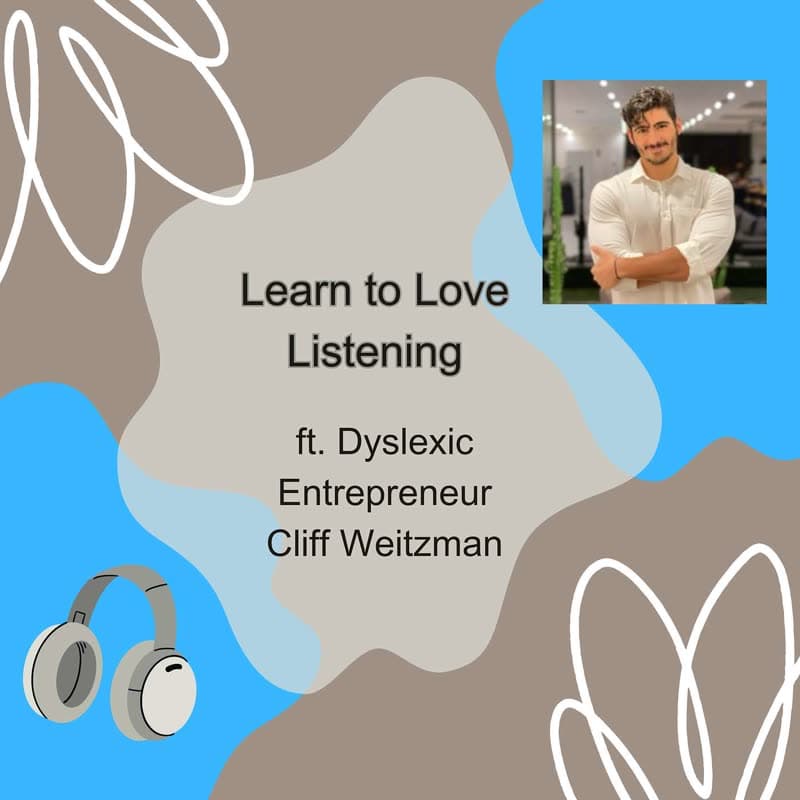
Learn to Love Listening ft. Cliff Weitzman, Dyslexic Founder and CEO of Speechify
In this installment of our Dyslexic Voices series, Cliff Weitzman, founder and CEO of Speechify (https://speechify.com/), tells us about his experiences growing up dyslexic, and shares his advice for how to succeed as a dyslexic child and adult.
When Phonics Isn't Enough
In the world of reading instruction, phonics has long been hailed as a cornerstone for teaching children to read, particularly for those with dyslexia. However, a recent article raises an important question: is there a limit to how much phonics can help as students progress into middle school? In this episode, we'll…

She Didn't Know She Was Dyslexic Until She Learned English ft. Haiyu Zhang
Haiyu Zhang grew up in China and moved to the US as a teenager. You can find her online at https://hz2784.github.io/.
Never miss an episode
New episodes every two weeks. Follow wherever you listen.