
Dyslexia Is NOT A Disease! Shifting Our Perspective
About this episode
Your kid may be diagnosed with dyslexia, but dyslexia is not a disease. It's a brain difference that has implications for learning, and perceiving and interacting with information in the world. So let's shift our mindset to support our dyslexic kids.
Here's a link to the book we mentioned in this video, The Dyslexic Advantage: Unlocking the Hidden Potential of the Dyslexic Brain by Brock L. Eide, M.D., M.A. and Fernette F. Eide, M.D. ---
https://www.amazon.com/Dyslexic-Advantage-Revised-Updated-Unlocking/dp/0593472233/
Transcript
Full transcript · 1,831 words · about 9 min to read. Press a timestamp to jump to that moment.
As parents of dyslexic kids, one question that comes up a lot is, what's the treatment for dyslexia? Today we'd like to talk about a way to reframe that and approach the entire dyslexic journey with a different mindset.
Hey everyone, we're Nick and Sonja and this is Dyslexia Journey, where we help you support the dyslexic kid in your life. And today we want to talk a little bit about our mindsets going into the Dyslexia Journey, perhaps just after our kids are diagnosed or, you know, maybe further along the journey. Because, you know, while it's really important to focus on the remediation aspect and figure out what form of extra help or form of reading, learning will work best for your dyslexic child, it's, I think that the overall mindset towards what dyslexia is and what your child's journey with dyslexia is, is really, really the most essential and important part we feel to undergirding all of that.
So, we're talking about mindset, so it's a little bit of a conceptual thing to talk about, but we're going to try to ground it into like three different ways of thinking about it. So, the first one is kind of just the practical aspect, which often means academic, but not always in this case. So, practically speaking, as I said, we're pretty focused on the reading remediation and that's important, extremely important. However, that's not the only piece that is going to be, that is not the only piece of how dyslexia will be involved in your kid's life.
And this is getting kind of to our main point here, which is that dyslexia is, you know, a way of thinking, a way of having a different kind of brain. And so, while the reading and writing are often how it comes to our attention, it's also true that it will affect other areas. And, you know, in a different video, we talked about ways that the sort of reading aspect pops up in everyday life.
And, you know, we like to also talk about how it can show up in different ways in math and science. But when you think about it, it's really a much broader issue of how a kid learns. And it can also have positive aspects, right? We get pretty focused on the more difficult aspects of it for obvious reasons. But it's important to realize that it's also this, you know, way of learning and interacting with information in the world.
So, did you want to talk a little bit more about the strengths aspect? Yeah. So, I think that it's important when we're thinking about treating dyslexia to understand what specifically we're talking about. Because when we're talking about treatment for dyslexia, I think that's really shorthand for reading and writing and sort of the traditional academic strengths. But as Sonja mentioned, it's really important to keep in mind that dyslexia is not just about reading and writing.
It is a difference in the brain that affects many aspects of our child's lives. So, for example, a lot of children who have dyslexia have really strong visual-spatial skills. There's this concept maybe of thinking in pictures that you might have heard, or just that someone's maybe a visual-spatial learner. And so, it's important when we are thinking about, quote, treating dyslexia, that we don't just focus on remediating the sort of capabilities that they might not be as good at, but also building on and playing to their strengths.
So, if they're a strong visual-spatial learner, then it's important to provide education as much as possible in more visual-spatial manner. Perhaps they need a more hands-on approach. Perhaps they need a more experiential approach to learning rather than more abstract, especially involving reading and writing. Right, and so, that's kind of thinking about the practical aspects, like particularly academic, and how it's a broader issue than just the reading and writing, even though that deserves so much attention.
The next, I think, sort of, you know, especially talking about the strengths, gets into the issue of identity. So, if we're talking about a brain difference, you know, we start to think about things like neurodiversity, and how, you know, again, when it's like really affecting how a brain is interacting with the world more generally, I mean, that does become more of an issue of identity. Right, and so, when we're talking about treating dyslexia, again, it's really, really important to keep in mind that dyslexia is an identity, and it's a whole way that people's brains work.
And so, it almost doesn't make sense, and while I understand that the question of treating dyslexia is important and foremost in many of our minds, it almost doesn't make sense to posit the question in that manner, right? Like, we're not, there's no cure for dyslexia. We can help our children learn better how to read and write and how to navigate the traditional academic setting and to get better at the sort of academic skills that are required in school, but dyslexia is something that they are going to be living with for their entire lives.
And so, when we're thinking about treating it, we need to keep in mind what our goals are and what we're really trying to accomplish. You know, we're trying to help them do better in school, but we don't want to overlook the fact that they're really, especially if they're taking this on as an identity, it's really important not to talk about it just as a problem and just as something to be overcome or to be cured.
I mean, this is something that they're going to live with and that we have to help them figure out both the strengths, how to leverage their strengths, and how to work on their weaknesses. Right. And I think it's important, yeah, that if we start, it's difficult not to do this because, you know, to get like your 504 plan or whatever, I mean, you need to be diagnosed. And I mean, it really is presented as a problem.
And it's like, if you have the problem, then you get more help. So, you know, it's not like we're always going to be perfect around languaging it or something like that. I think it can start to slip, though, into the, like Nick said, the thing where it's like about being cured, though. And that's that becomes where it's like, well, would you really want to be because you're talking about, you know, their actual brain difference.
And that's where I think the identity part becomes clear, that to not let the fact that we have to figure out how to help them with the parts that are a struggle, you know, with the way school is set up, but to not let that slip into that they should fundamentally change in a way that's really like the way their brain is and that also has strengths. Yeah, there's a great book that I want to recommend called The Dyslexic Advantage, and you can find the links in the notes for the video or for the podcast.
It's a really good book at talking about sort of different ways that dyslexic people often have strengths in kind of surprising areas that you might not have thought about. It's a really good read to start getting yourself out of the mindset of dyslexia just being a problem and something to be cured. So I highly recommend that book. Yeah, and there's a few TED Talks. You might have seen some of those already, too, that are really good that way and really pointing out, you know, they also emphasize that each kid's individual, too.
So some dyslexic thinkers are, you know, really good with outside-the-box thinking, holistic thinking. Some of them it's more visual-spatial, creativity, but there's a lot of different strengths that we don't often think of but that are there. And so this kind of all leads into the third point, which is advocacy. So, again, a really primary part of our advocacy is simply, like, with the schools, with getting them the extra support they need, and it just has to be.
But with that said, I think keeping this mindset of, you know, more generally what dyslexia is, I think that's important because it helps us remember that it is partly this clash between the way that a dyslexic brain works and the way the school system is set up. And, you know, I'm not saying necessarily we can, you know, change the school system completely or anything like that, but I think it's always important to remember that because it is possible that sometimes there could be a more of an emphasis on different learning styles more and more.
I know there's some talk of that, but I wouldn't say it's been, like, hugely implemented yet in the school system. So I think it's important to realize that that is possible and, like, and so thinking a little more outside the box in terms of advocacy, too, can be really important, and it kind of takes this mindset to be able to think about it that way. So while it's important, I guess, just to sort of augment that a little bit, while it's important to teach children the remedial reading and writing skills and how to get along in a traditional academic setting, it's important also to not necessarily accept that the traditional approach to schooling that maybe you went through yourself is the only approach.
Or that it's the right way. Or that it's the right way. I think even if you're not trying to change it, like, realizing that's not the only way or not the right way can be helpful. Right. And so there are a lot of alternative educational approaches ranging from just advocacy within the system with 504 plans and IEPs to schools that are actually only for dyslexic kids that approach education completely differently. Right. So, you know, hopefully that makes sense as a way to think about these concepts around our mindset for dyslexia, both practically as an issue of an identity and also, like, in the way we think about our advocacy for dyslexic kids.
That, you know, that we just need to keep in mind, even while we have to, you know, go really hard on the practical reading and writing stuff, that to keep in mind that they're really what dyslexia is and that it's this brain difference and, you know, has to do with neurodiversity and isn't something that's going away. It's who our kid is, too. We'd love to know your thoughts in the comments just about the mindset stuff in general or anything to do with identity and dyslexia.
Yeah, we might do more episodes on that potentially, too, because it's actually a really big topic. Thanks, everyone.
More from the show
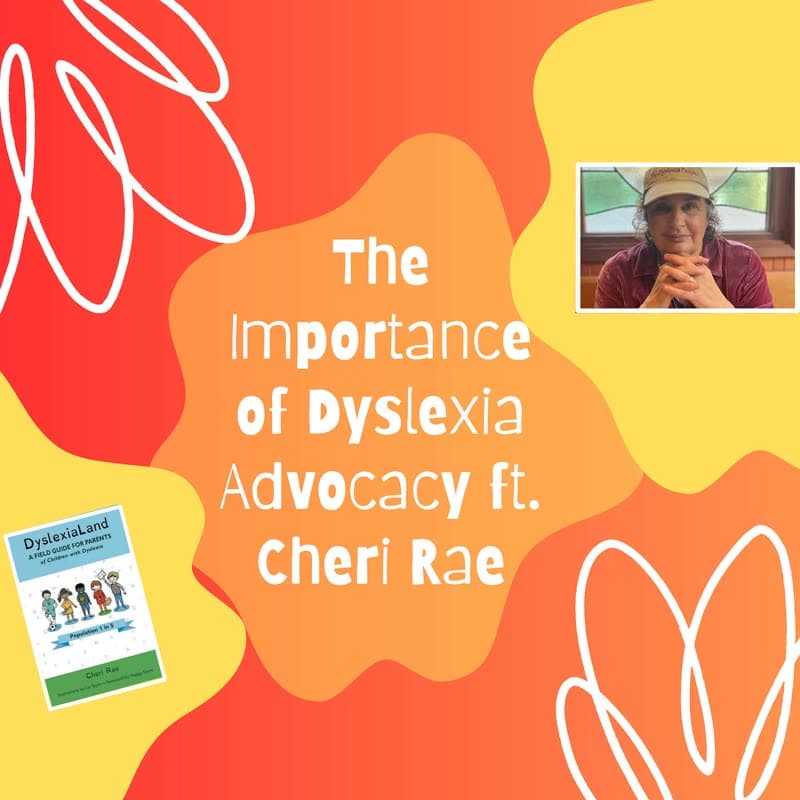
One Parent’s Journey To Dyslexia Advocacy Ft. Cheri Rae
In part one of our three-part interview with author and literacy advocate Cheri Rae we explore her own journey with dyslexia starting as the parent of a dyslexic elementary school kid, her advocacy work, and her book, DyslexiaLand.
6 Tips for Helping Dyslexic Kids Learn Foreign Languages + Should They Even Have To?
It's hard enough for our dyslexic kids to learn to read and write in English, and now we expect them to learn a foreign language too?
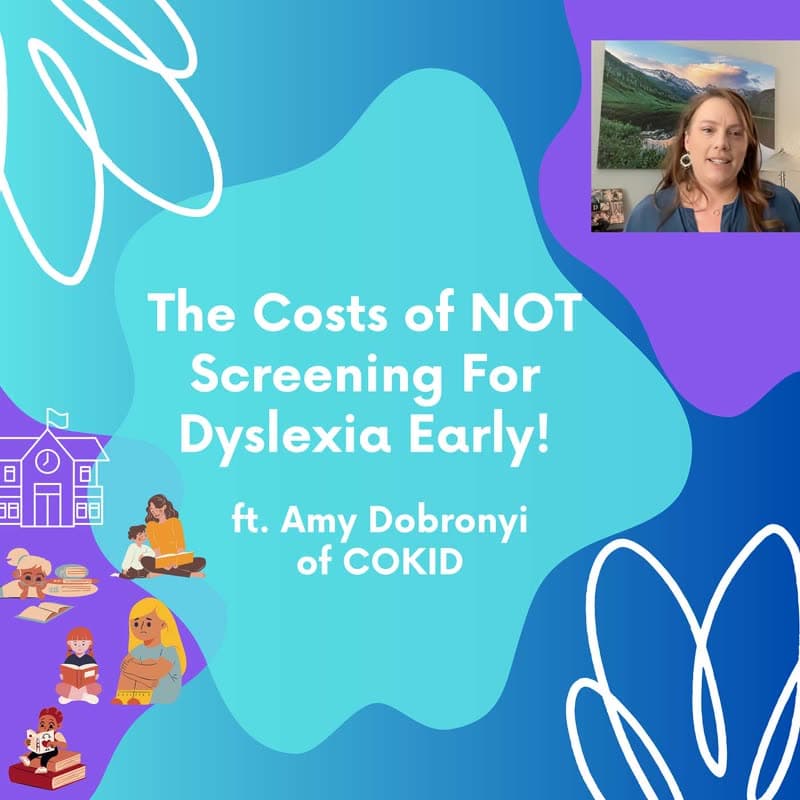
The Importance of Early Dyslexia Identification ft. Amy Dobronyi of COKID
Amy Dobronyi (pronounced duh-BRO-nee) is a Co-founder and Co-chair of COKID (Colorado Kids Identified with Dyslexia - https://www.cokid.org/), a grassroots parent group, whose mission is to improve the lives of individuals with dyslexia through advocacy, education, and legislation.
Never miss an episode
New episodes every two weeks. Follow wherever you listen.